Expat Estate Planning in Ecuador: Navigating Succession Law & Formalities
Understand Ecuadorian succession law for expats. Learn about forced heirship, wills, and international considerations for your estate in Ecuador.
Estate Planning for Expats in Ecuador: Navigating Ecuadorian Succession Law and Statutory Formalities
Moving to Ecuador, especially to the vibrant city of Cuenca, presents a unique opportunity for expatriates to embrace a new lifestyle. As you establish your roots, it is crucial to address all aspects of your life here, including ensuring your assets are managed and distributed according to your wishes, both in Ecuador and internationally. This is where understanding Ecuadorian succession law and the statutory formalities involved in estate planning becomes paramount.
At CuencaLawyer.com, we understand the complexities that can arise when different legal systems intersect. Our mission is to demystify these processes, providing you with the authoritative, detailed, and reassuring guidance necessary to protect your legacy. This comprehensive article will delve into the intricacies of Ecuadorian inheritance law, compare it to common North American practices, and outline the practical steps you need to take to create a robust estate plan tailored to your circumstances in Ecuador.
Understanding the Framework: Ecuadorian Succession Law
Ecuadorian succession law is primarily governed by the Civil Code (Código Civil), specifically Title IX – Of Successions, comprising Articles 993 through 1419. This legal framework dictates how a deceased person's assets (the estate) are transferred to their heirs. Unlike some common law jurisdictions that emphasize testamentary freedom, Ecuadorian law, like many civil law systems, adopts a more structured approach, balancing the deceased's wishes with the protection of certain heirs.
A fundamental concept in Ecuadorian succession law is the "legítima", or forced heirship. This principle mandates that a certain portion of the estate must be reserved for specific close relatives, regardless of what a will might state. This is a significant departure from the inheritance laws in the United States and Canada, where individuals generally have broader freedom to disinherit close family members through their wills.
Key Concepts in Ecuadorian Succession Law
-
Forced Heirs (Herederos Forzosos): These are the individuals who are legally entitled to a portion of the estate. Under Article 1021 of the Civil Code, forced heirs include:
- Descendants: Children, grandchildren, and so forth.
- Ascendants: Parents and grandparents.
- Surviving Spouse or Partner: If there are no descendants or ascendants, the surviving spouse or registered partner inherits. If there are descendants or ascendants, the spouse or partner inherits a portion as part of the marital property (gananciales) and potentially a share of the inheritance, depending on the specific circumstances and the existence of other heirs.
-
The "Quinta de Libres Disposición" (One-Fifth for Free Disposition): This refers to the portion of the estate that the testator (the person making the will) can freely distribute through their will to any beneficiary they choose. This is approximately 20% of the estate.
-
The "Cuatro Quintas" (Four-Fifths for Forced Heirs): The remaining 80% of the estate is reserved for the forced heirs. This portion must be divided among them according to the legal order of succession.
Example in Practice: Imagine an expat living in Cuenca who passes away with two children. According to Ecuadorian law, 80% of their estate in Ecuador would be legally mandated to go to those two children. The remaining 20% could be bequeathed to whomever the expat designated in their will – perhaps a friend, a charity, or even one of the children in a larger proportion.
This system ensures a baseline level of protection for immediate family members, a concept rooted in the civil law tradition. For North American expats accustomed to greater testamentary freedom, understanding this distinction is vital for effective estate planning.
International Considerations: Assets in Ecuador and Abroad
A common scenario for expats is owning assets both in Ecuador and in their home country (e.g., the United States or Canada). Ecuadorian succession law primarily governs assets located within Ecuador. However, the interaction between Ecuadorian law and the laws of your country of origin can be complex and requires careful consideration.
- Immovable Property: Real estate located in Ecuador is subject to Ecuadorian inheritance laws. This means that the transfer of a property owned in Cuenca will need to follow the procedures outlined in the Civil Code and relevant property registration laws.
- Movable Property: Assets like bank accounts, investments, vehicles, and personal belongings located in Ecuador will also generally fall under Ecuadorian succession law.
- Assets Abroad: Assets located in your home country will be subject to the inheritance laws of that country.
The Challenge of Dual Jurisdictions
This dual jurisdiction can lead to several challenges:
- Conflicting Laws: The forced heirship rules in Ecuador may conflict with inheritance wishes for assets in a common law jurisdiction that offers greater testamentary freedom.
- Probate Processes: Separate probate or estate administration processes may be required in both Ecuador and your home country, potentially leading to increased costs and time.
- Tax Implications: Both Ecuador and your home country may have their own tax implications for inherited assets, such as inheritance tax (though Ecuador does not currently have a national inheritance tax in the traditional sense, capital gains or transfer taxes can apply) or estate tax.
Strategic Planning is Key: To navigate these complexities, a well-structured international estate plan is essential. This involves coordinating wills, identifying asset locations, and understanding the legal frameworks of all relevant jurisdictions.
Crafting Your Ecuadorian Estate Plan: Statutory Formalities and Practical Steps
Developing a comprehensive estate plan in Ecuador involves several key components, each with its own set of statutory requirements.
1. The Will (Testamento)
While Ecuadorian law reserves a portion of the estate for forced heirs, a will remains the cornerstone of estate planning. It allows you to:
- Appoint an Executor (Albacea): The executor is responsible for administering your estate, paying debts, and distributing assets according to your will. You can name a trusted individual or a legal professional.
- Designate Beneficiaries for the Freely Disposable Portion: You can specify who receives the "quinta de libres disposición" (20%).
- Appoint Guardians for Minor Children: If you have underage children, your will can name their legal guardian.
- Outline Specific Bequests: You can leave particular items or sums of money to specific individuals or organizations.
Types of Wills in Ecuador
| Will Type | Description | Statutory Basis | Key Formalities | Estimated Cost (Cuenca) |
|---|---|---|---|---|
| Open Will (Testamento Abierto) | Declared orally to a notary and witnesses; recorded by the notary, read to the testator, and signed by all. Highly recommended for expats. | Articles 1056-1061 of the Civil Code | Requires a public notary and at least two witnesses present throughout the reading and signing. | $75 - $150 USD |
| Closed Will (Testamento Cerrado) | Written by the testator, sealed, and presented to a notary and witnesses, who attest to its presentation without reading its contents. | Articles 1062-1064 of the Civil Code | Requires a public notary and three witnesses. The will is presented in a sealed envelope. | Similar to Open Will |
| Holographic Will (Testamento Hológrafo) | Written entirely in the testator's own handwriting, dated, and signed. No notary or witnesses required at the time of writing. | Generally less common, validity can be complex. | No notary or witnesses at writing; often requires extensive proof in probate. Not recommended for expats. | N/A (potential for higher legal fees if contested) |
Recommendation for Expats: We strongly recommend the open will (testamento abierto) as it provides greater clarity, reduces the risk of future disputes, and is more readily accepted by Ecuadorian authorities. It is crucial that the will is drafted in Spanish or accompanied by a certified translation.
2. Power of Attorney (Poder) in Estate Matters
A Power of Attorney (Poder General o Especial) is a vital tool, especially if you anticipate being away from Ecuador for extended periods or if you want to designate someone to handle your affairs in case of incapacity.
- General Power of Attorney: Grants broad authority to an agent to act on your behalf in various matters, including financial and legal affairs.
- Special Power of Attorney: Grants authority for specific actions, such as the sale of a property or managing a particular bank account.
Key Considerations for Powers of Attorney
- Notarization: Powers of attorney in Ecuador must be notarized by a public notary.
- Registration: Depending on the nature of the power granted, it may need to be registered with the relevant government bodies, such as the Registro de la Propiedad (Property Registry) for real estate matters.
- Apostille: For a Power of Attorney granted in Ecuador to be valid in your home country (or vice-versa), it often requires an Apostille under the Hague Convention. This is a certification that authenticates the origin of a public document.
Example in Cuenca: If you are purchasing a property in the Azuay province and need to return to the US for a period, you could grant a Special Power of Attorney to a trusted individual or lawyer in Cuenca to sign documents on your behalf at the Notaría Primera or Notaría Segunda (common notary offices in Cuenca) and to complete the registration at the Registro de la Propiedad de Cuenca.
Cost of Notarization: A basic Special Power of Attorney for a specific transaction in Cuenca might cost between $50 and $100 USD.
3. Trusts and Other International Planning Tools
While Ecuador does not have a direct equivalent to the common law trust in its civil code, creative international estate planning can incorporate trusts established in jurisdictions that recognize them.
- How Trusts Can Work: An expat might establish a trust in a jurisdiction like the United States or Panama. Assets in Ecuador could then be gifted or transferred into this trust. The trust document would dictate how these assets are managed and distributed, potentially bypassing some of the complexities of direct Ecuadorian succession.
- Coordination is Crucial: The validity and enforceability of foreign trusts in Ecuador can be a nuanced legal matter. It is essential to work with legal professionals experienced in both Ecuadorian and international law to ensure proper structuring and seamless integration with your Ecuadorian assets.
4. Joint Ownership and Beneficiary Designations
For certain assets, such as bank accounts or sometimes real estate, you may consider joint ownership with rights of survivorship or beneficiary designations.
- Joint Bank Accounts: If you have a joint bank account with your spouse or a trusted individual, the funds may pass directly to the surviving owner upon your death, bypassing the formal succession process.
- Real Estate: While less common for full bypass of succession, some forms of joint tenancy exist. However, understanding the implications of Ecuadorian marital property regimes (community property vs. separate property) is crucial when considering joint ownership of real estate.
Important Note: While these methods can simplify asset transfer, they should be implemented with a clear understanding of their implications for forced heirship rules and potential tax consequences in both Ecuador and your home country.
5. Marriage and Marital Property Regimes
Your marital status significantly impacts estate planning in Ecuador. Ecuadorian law presumes a "sociedad de gananciales" (community of property) unless specific agreements are made otherwise.
- Sociedad de Gananciales: Under this regime, assets acquired during the marriage are considered jointly owned by both spouses, regardless of who earned the money. Upon the death of one spouse, their half of the community property typically goes to their heirs, while the surviving spouse retains their half.
- Separation of Property (Separación de Bienes): Couples can opt for a separation of property regime before marriage or during marriage through a formal agreement registered with the Civil Registry. In this case, each spouse owns their assets separately.
Impact on Succession: Understanding which marital property regime applies to you is critical, as it determines what portion of your assets are considered your separate estate to be distributed according to your will and what portion is community property that passes in accordance with the law.
Navigating the Succession Process in Ecuador (Post-Mortem)
If an Ecuadorian national or resident passes away, the estate administration process typically involves:
- Inventory and Valuation: All assets and liabilities of the deceased must be identified and valued. This often involves obtaining documentation from banks, government agencies like the Superintendencia de Compañías, Valores y Seguros (for company shares), and the SRI (Servicio de Rentas Internas) for tax-related information.
- Debt Settlement: Any outstanding debts and taxes must be paid.
- Distribution of Assets: Assets are distributed to heirs according to the will and the rules of forced heirship.
- Formalities for Property Transfer: For real estate, the transfer of ownership must be formally registered at the Registro de la Propiedad in the relevant canton (e.g., Cuenca). This involves presenting a court order or a notarized succession document, along with property deeds and tax certificates from the Municipio de Cuenca (Cuenca Municipality) confirming property tax payments.
- Probate (Juicio de Sucesión): If there are disputes among heirs or if the deceased left no clear instructions, a formal legal process called a "Juicio de Sucesión" (succession lawsuit) may be required in court. However, for straightforward estates with a valid will, a simpler notarial process is often possible.
Timeframes: The duration of the estate administration process can vary significantly. A simple, uncontested succession with a valid will and clear assets might take 6 to 12 months. However, complex cases involving disputes or numerous international assets could extend this period considerably.
Conclusion: Proactive Planning for Peace of Mind
Estate planning for expats in Ecuador is not merely a legal formality; it is an act of responsible foresight that provides invaluable peace of mind for you and your loved ones. The Ecuadorian Civil Code, with its principles of forced heirship, presents a distinct framework compared to common law systems prevalent in North America.
At CuencaLawyer.com, we are dedicated to providing you with the in-depth, expert legal insights you need to navigate these intricacies. By understanding the statutory requirements, the nuances of Ecuadorian succession law, and the importance of international coordination, you can craft a robust estate plan that safeguards your assets and ensures your legacy is honored.
We encourage you to consult with our experienced legal team. We can assist you in drafting a legally sound will, establishing appropriate powers of attorney, and advising on the most effective strategies for managing your assets across jurisdictions. Don't leave your future to chance; take proactive steps today to secure your estate in Ecuador.
About the Author
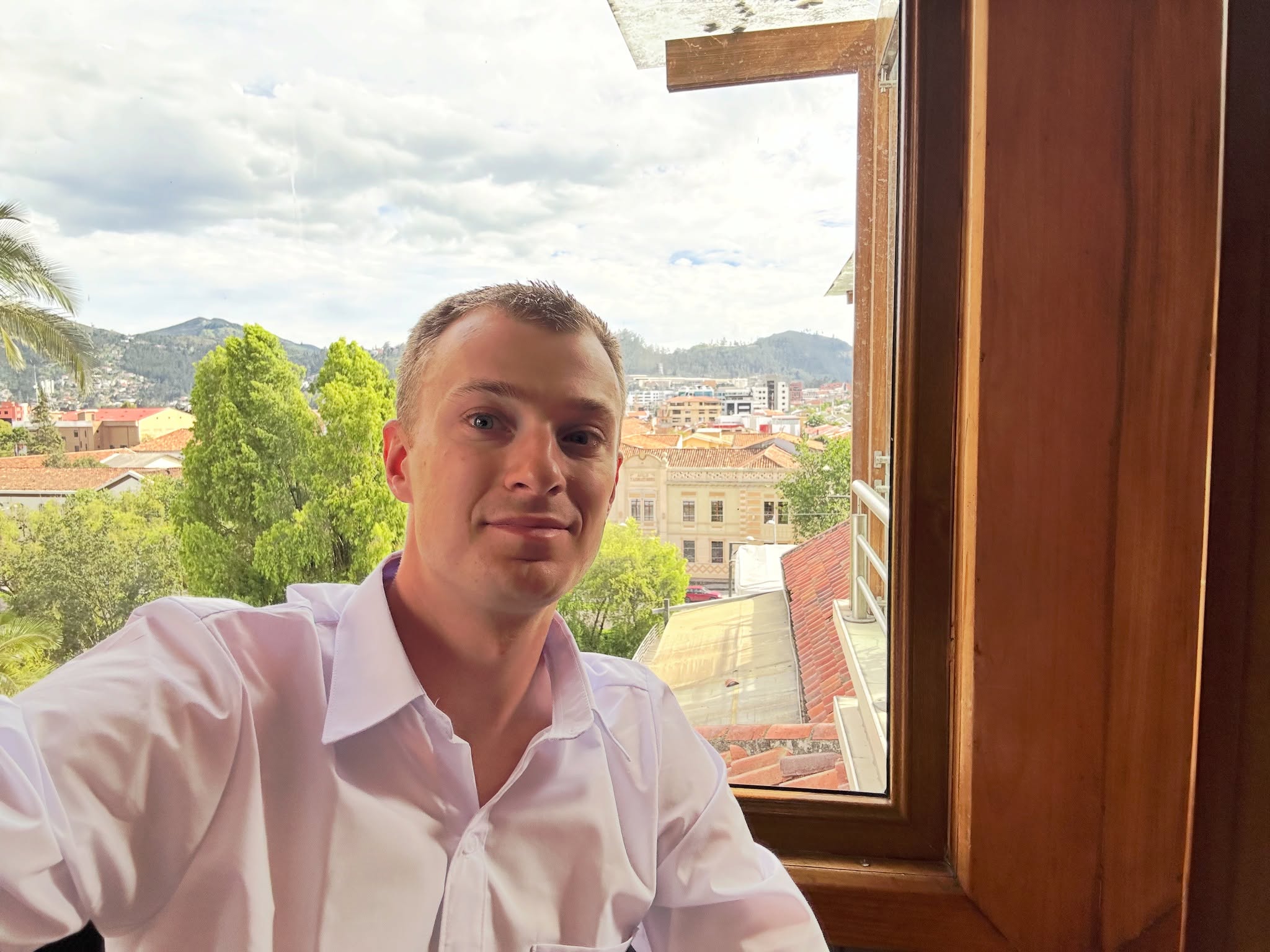
Chip Moreno — American Expat in Cuenca, Ecuador
Chip is the founder of EcuaPass (Ecuador visa services), FileAbroad (U.S. taxes for expats), EcuaInsure (health insurance), EcuadorTranslations, and CuencaExpat (daily news). He holds a B.S. in Computer Science from WGU, obtained his Ecuador Professional Visa in 2025, and is pursuing the IRS Enrolled Agent credential and an Ecuadorian insurance broker license.