High Utility Bill in Cuenca? How to Dispute ETAPA & CENTROSUR Charges
Expat guide to disputing utility bills in Cuenca, Ecuador. Learn your rights and the step-by-step process for challenging ETAPA & CENTROSUR with legal recourse.
Navigating Utility Bill Disputes in Cuenca: Your Rights and Recourse with ETAPA and CENTROSUR
As an expat settling into life in Cuenca, the last thing you want is a protracted dispute over an unexpectedly high utility bill. Yet, discrepancies on your statements from ETAPA EP (Empresa Pública Municipal de Telecomunicaciones, Agua Potable, Alcantarillado y Saneamiento) or CENTROSUR can and do occur. These issues can range from inflated water charges due to an undetected leak to erroneous electricity consumption readings. Understanding your rights and the formal procedures for challenging these charges is not just advisable—it's essential.
As an Ecuadorian lawyer based in Cuenca, I have guided numerous foreign residents through these specific administrative processes. This guide demystifies the system, providing a step-by-step, compliant approach backed by Ecuadorian law and local, on-the-ground experience.
Understanding Your Rights: The Legal Foundation
Your right to fair and accurate billing is not merely a customer service policy; it is enshrined in Ecuadorian law. The primary legal frameworks governing these services are:
- Ley Orgánica de Defensa del Consumidor (Organic Law of Consumer Defense): Specifically, Artículo 25 establishes the right of consumers to receive public services of optimal quality and to have mechanisms for redress. It mandates clear, transparent, and accurate billing.
- Ley Orgánica del Servicio Público de Energía Eléctrica (Organic Law of the Public Electric Energy Service): This law and its regulations govern CENTROSUR's operations, setting standards for meter reading, billing, and the formal complaint process.
- Código Orgánico Administrativo (COA): This code governs all procedures with public entities, including ETAPA and CENTROSUR. It outlines the formal requirements for submitting a complaint (reclamo administrativo) and the timelines for the administration to respond.
- Ordenanzas Municipales (Municipal Ordinances): The Municipality of Cuenca has specific ordinances that regulate the services provided by its public company, ETAPA.
These laws ensure you have a legal right to challenge a bill you believe to be incorrect and to receive a formal, reasoned response from the utility provider.
Step-by-Step Guide to Resolving a Utility Bill Dispute
Acting promptly and methodically is crucial. A disorganized approach can undermine your claim.
Step 1: Foundational Evidence Gathering
Before contacting anyone, build your case. Solid evidence is your strongest asset.
- Analyze the Bill: Scrutinize the disputed bill. Identify the billing period (período de facturación), consumption listed in cubic meters (m³ for ETAPA) or kilowatt-hours (kWh for CENTROSUR), the "lectura actual" (current reading), and "lectura anterior" (previous reading).
- Historical Comparison: Gather your bills from the last 6-12 months. Create a simple chart to show your average consumption. A sudden, unexplained spike is a powerful piece of evidence.
- Property Inspection (Crucial for ETAPA): An astronomical ETAPA bill is almost always caused by an internal water leak (fuga interna). Perform a "leak test": ensure all faucets are off, then check if the small gear or dial on your water meter is still spinning. Check toilets for silent leaks (a common culprit), irrigation systems, and water heaters.
- Meter Verification: Safely locate your electricity and water meters. Take a clear, time-stamped photo of the current reading. Compare this with the "lectura actual" on your bill. Sometimes, a CENTROSUR bill will be based on a lectura estimada (estimated reading), which can be a source of error and is often indicated by a code on the bill itself.
- Gather Corroborating Documents: If you were traveling during the billing period, have copies of your flight itineraries or passport stamps ready. If a plumber recently performed work, have the invoice.
Step 2: Filing the Formal Administrative Complaint (Reclamo Administrativo)
You must first exhaust the utility's internal channels.
- Go in Person: While phone calls are an option, an in-person visit to a main customer service center (agencia principal), such as the ETAPA office on Gran Colombia y Tarqui, is far more effective. Hyper-Specific Detail 1: Do not forget to bring your original cédula or passport. Without your official ID, the service agent cannot access your account, and you will have wasted the trip—a common and frustrating mistake for many expats.
- Use Precise Language: State clearly, "Deseo presentar un reclamo administrativo por facturación excesiva" (I wish to file an administrative complaint for excessive billing).
- Submit Your Evidence: Present copies (never originals) of your past bills, the photo of your meter reading, and any other evidence.
- Obtain a Complaint Number: The agent will file your complaint in the system and provide you with a printed receipt that includes your número de reclamo or ticket number. This document is your legal proof that you have initiated the process. Do not leave without it.
Step 3: The Technical Inspection and Investigation
Once your reclamo is filed, the provider is obligated to investigate.
- ETAPA: ETAPA will typically schedule a inspección técnica to determine if a leak exists. A technician will visit your property to inspect the meter and the connection point.
- CENTROSUR: They may dispatch a technician to test your meter's accuracy (revisión del medidor) or verify the reading in person.
- Hyper-Specific Detail 2: If an ETAPA inspection confirms the high consumption is due to a leak inside your property line (e.g., a faulty toilet or underground pipe), you are generally liable for the water consumed. However, upon providing proof of repair (e.g., a plumber's invoice), you can often negotiate a partial credit (nota de crédito) on the excess consumption as a gesture of goodwill, though this is not guaranteed by law.
- Hyper-Specific Detail 3: Be aware that if a technical inspection from either utility company is requested and the fault is determined to be on your side (e.g., an internal leak for ETAPA, or tampering with the meter for CENTROSUR), you may be charged a nominal fee for the visit. For an ETAPA leak inspection where the fault is internal, this fee is typically around $15 - $25 and will be added to a subsequent bill.
Step 4: Responding to the Provider's Decision
The utility will issue a formal resolution, either accepting your claim and adjusting the bill, or denying it with a justification.
- If Your Claim is Accepted: The provider will issue a corrected bill or a credit to your account. Verify that the adjustment is correct.
- If Your Claim is Denied: The resolution must explain the technical and legal reasons for the denial. If you disagree with this finding, you can proceed to the next level of appeal.
⚠️ Critical Legal Warning: Do NOT pay the disputed portion of the bill while your reclamo is pending. Under Ecuadorian administrative law, paying the full amount can be legally interpreted as an aceptación tácita de la deuda (tacit acceptance of the debt), which severely weakens your position for any future appeals. Pay only the undisputed amount corresponding to your historical average consumption. Inform the customer service agent of your intention to do so when you file the complaint.
Step 5: Escalation to Regulatory Bodies
If your internal complaint and any subsequent appeals are denied, you can escalate the matter to the appropriate oversight agency.
- For CENTROSUR (Electricity): File a formal complaint with the Agencia de Regulación y Control de la Energía y Recursos Naturales No Renovables (ARCERNNR). Their website provides procedures for submitting a consumer complaint, which is a more formal administrative process that legally compels both parties to present evidence.
- For ETAPA (Water/Sewer/Telecom): As a municipal entity, the primary appellate body is often the Dirección de Servicios Públicos of the Municipality of Cuenca or, in more serious cases, you may need to file an appeal with the Defensoría del Pueblo (Ombudsman's Office), which protects citizen rights against abuses by public entities.
Step 6: Legal Action (Final Recourse)
If all administrative channels fail, your final option is to seek recourse through the judicial system by filing a lawsuit in a Contentious-Administrative Court (Tribunal Distrital de lo Contencioso Administrativo). This step is complex, requires legal representation, and should be reserved for cases involving significant financial amounts or clear violations of law.
Legal Checklist for Cuenca Expats: Utility Disputes
- [ ] Gather disputed bill and at least 6-12 months of historical bills for comparison.
- [ ] Conduct and document a property inspection (leak test, meter photo).
- [ ] Bring original ID (cédula/passport) to the utility office.
- [ ] Formally file a reclamo administrativo in person.
- [ ] Obtain and safeguard the printed número de reclamo receipt.
- [ ] Pay only the undisputed, average portion of the bill while the case is open.
- [ ] If denied, submit a written appeal (recurso de apelación) to the utility provider.
- [ ] If internal appeals fail, prepare a formal complaint for the relevant regulatory body (ARCERNNR for CENTROSUR, Municipality/Defensoría del Pueblo for ETAPA).
⚠️ When to Consult an Attorney
While you can handle the initial stages yourself, seek professional legal counsel immediately if:
- The utility provider threatens service disconnection for the disputed amount.
- The amount in dispute is substantial (e.g., several hundred dollars or more).
- Your claim is denied with a technical justification you believe is factually incorrect.
- You receive any document titled notificación legal or providencia.
- You feel overwhelmed by the process or face a language barrier in formal written communications.
By understanding the legal framework and following these precise steps, you can effectively challenge and resolve utility billing errors in Cuenca.
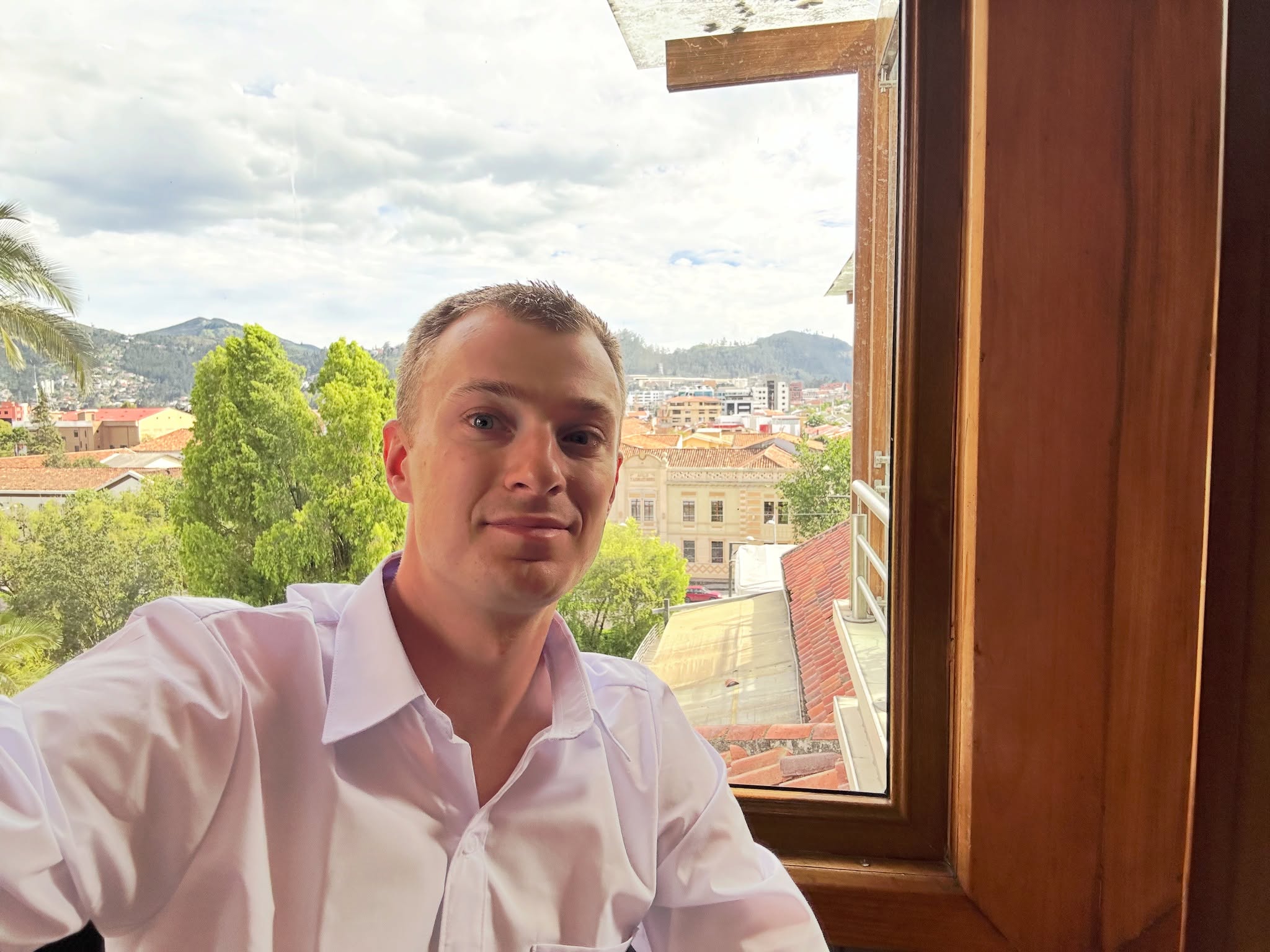
About the Author
Chip Moreno — American Expat in Cuenca, Ecuador
Chip is the founder of EcuaPass (Ecuador visa services), FileAbroad (U.S. taxes for expats), EcuaInsure (health insurance), EcuadorTranslations, and CuencaExpat (daily news). He holds a B.S. in Computer Science from WGU, obtained his Ecuador Professional Visa in 2025, and is pursuing the IRS Enrolled Agent credential and an Ecuadorian insurance broker license.