Ecuador Environmental License for Construction: Your Investor's Guide
Unlock Ecuador's environmental regularization process for major construction projects. Get your Environmental License (Licencia Ambiental) efficiently with expe
Navigating Ecuador's Environmental Regularization for Major Construction Projects: A Guide for Investors
Embarking on a significant construction project in Ecuador, whether for commercial development, large-scale residential complexes, or industrial ventures, involves more than securing land and blueprints. A critical, and often complex, legal requirement is the environmental regularization process, which culminates in obtaining an Environmental License. As an Ecuadorian lawyer specializing in environmental and real estate law, I have guided numerous international clients through this intricate bureaucratic landscape. This guide will demystify the process, providing the authoritative, hyper-specific, and reassuringly clear information necessary for legal compliance and project success.
The environmental review is not merely a hurdle; it is a cornerstone of Ecuador’s constitutional commitment to the Rights of Nature (Derechos de la Naturaleza) and sustainable development. The legal framework is robust, primarily established by the Código Orgánico del Ambiente (COA), which superseded the older Environmental Law, and its detailed regulations, the Reglamento al Código Orgánico del Ambiente (RCOA). These laws mandate that any project with the potential to cause environmental impact must undergo a rigorous assessment to secure the appropriate environmental authorization.
Understanding the Legal Basis: What Triggers an Environmental Review?
The requirement for a full Environmental Impact Study (EIS) is not a blanket rule. The process is triggered by the scale, nature, and potential impact of the proposed activity. The Ministerio del Ambiente, Agua y Transición Ecológica (MAATE) classifies projects based on their potential environmental risk, as detailed in the national environmental catalogue.
As stipulated in Artículo 177 of the COA, projects are categorized based on the level of impact they are expected to generate:
- Low Impact: These projects typically do not require an EIS. They are regularized through a simpler Environmental Registry (Registro Ambiental), which involves submitting a declaration of good environmental practices. Many smaller construction projects fall here.
- Medium Impact: These projects require an Environmental Impact Study (EIS) and a detailed Environmental Management Plan (PMA). The corresponding authorization is an Environmental License (Licencia Ambiental).
- High Impact: These require an exhaustive Expanded Environmental Impact Study (Estudio de Impacto Ambiental Ampliado) and are also granted an Environmental License upon approval.
Examples of projects that almost always fall under the medium or high impact categories include:
- Large-scale residential developments (urbanizaciones) exceeding established area or housing unit thresholds.
- Commercial centers, industrial parks, and manufacturing facilities.
- Major infrastructure projects (highways, ports, energy generation).
- Mining, hydrocarbon extraction, and large-scale agricultural operations.
- Substantial tourism developments, especially near sensitive ecosystems.
Expert Tip: Before any significant investment of time or capital, the very first step is to obtain a Certificado de Intersección. This is a mandatory, automatically generated certificate from the MAATE's online platform that officially determines if your project's coordinates overlap with the National System of Protected Areas (SNAP), Protective Forests and Vegetation (Bosques y Vegetación Protectora), or the heritage sites of indigenous peoples. A positive intersection dramatically increases the complexity, requirements, and cost of the environmental process. Proceeding without this certificate is a critical and costly error.
The Environmental Regularization Process: A Step-by-Step Breakdown
The entire process is managed digitally through the government's Sistema Único de Información Ambiental (SUIA). All documents are uploaded, and all communications from MAATE are issued via this platform.
1. Project Registration and Initial Screening (SUIA): The process begins by creating a user profile in the SUIA system and registering the project. Here, you will request the crucial Certificado de Intersección. Based on the project's characteristics as described in the initial forms, the system will preliminarily categorize its potential impact level.
2. Terms of Reference (TDR) for the EIS: For medium and high-impact projects, you must draft and submit Terms of Reference (Términos de Referencia) for the Environmental Impact Study. This document outlines the proposed scope, methodology, team of experts, and specific areas of analysis for the EIS. The TDR must be approved by MAATE before the main study can commence.
3. Environmental Impact Study (EIS) and Management Plan (PMA): This is the core technical stage, conducted by a MAATE-accredited environmental consultant.
- Baseline Study (Línea Base): A comprehensive analysis of the existing physical (geology, hydrology, air quality), biological (flora, fauna, ecosystems), and socio-economic environment.
- Impact Identification and Evaluation: A systematic prediction and assessment of the project's potential positive and negative impacts during construction, operation, and closure.
- Environmental Management Plan (PMA): This is the most critical component. It is a detailed, actionable plan proposing specific, budgeted measures for preventing, mitigating, and compensating for significant negative impacts. It includes sub-plans for contingency, monitoring, community relations, and site abandonment/closure.
4. Public Participation Process (Proceso de Participación Ciudadana - PPC): Mandated by law, the PPC is a formal process to inform and consult with the community and stakeholders who may be affected by the project. For an EIS, this typically involves a public presentation of the draft study at an Asamblea Pública or the setup of a Public Information Center. Evidence of this process, including meeting minutes, attendance lists, and responses to public concerns, is a mandatory part of the submission.
5. Submission, Technical Review, and Administrative Fees: The complete EIS and PMA are uploaded to the SUIA platform. At this stage, you must pay the Tasa por servicios administrativos de revisión y análisis. This fee is not trivial; it is often calculated as one-per-thousand (1x1000) of the total declared project investment cost, with a minimum fee often around $200. MAATE technicians then conduct a thorough review, which can involve requests for clarification (observaciones) or additional information.
6. Performance Bond (Garantía de Fiel Cumplimiento): For projects obtaining an Environmental License, MAATE will require the submission of a performance bond or an insurance policy (Póliza de Seguro de Fiel Cumplimiento al Plan de Manejo Ambiental). This financial guarantee ensures that funds are available to execute the Environmental Management Plan. The value is determined by MAATE based on the estimated cost of the PMA's most critical measures. This can represent a significant, often unexpected, capital expense.
7. Issuance of the Environmental License: Once all technical and administrative requirements are met, including the approval of the performance bond, MAATE issues the Environmental License (Licencia Ambiental) via an official resolution (Resolución). This license is the legal authorization to begin the project, and it contains specific, legally binding conditions that must be adhered to throughout the project's life.
Essential Documentation: A Precise Checklist
While the full list is extensive, key documents uploaded to the SUIA portal include:
- RUC (Registro Único de Contribuyentes): The company or individual's tax ID.
- Nombramiento del Representante Legal: Legally notarized document proving the authority of the company's representative.
- Proof of Land Tenure: Updated property title (escritura) registered with the Property Registrar, or a valid lease agreement.
- Certificado de Intersección from the SUIA system.
- Approved Terms of Reference (TDR) for the EIS.
- Complete Environmental Impact Study (EIS), signed by the legal representative and the accredited lead consultant.
- Detailed Environmental Management Plan (PMA), including budgets and timelines.
- Evidence of the Public Participation Process (PPC).
- Proof of Payment for all applicable administrative fees (tasas).
- Garantía de Fiel Cumplimiento (the approved performance bond/insurance policy).
Crucially, as per MAATE regulations like Acuerdo Ministerial Nro. MAAE-2021-025, the EIS must be prepared by environmental consultants and operators who hold an active qualification (Calificación) from the Ministry. Verifying your consultant's credentials on the MAATE website is a non-negotiable step.
Common Expat Pitfalls to Avoid
- Underestimating the Timeline & Budget: A straightforward EIS process can take 6 to 12 months. Complex projects or those with public opposition can take much longer. Budget not only for consultant fees but also for the administrative tasas and the potentially substantial cost of the Garantía de Fiel Cumplimiento.
- Hiring the Wrong Consultant: Do not simply hire the cheapest consultant. Engage a reputable firm with proven experience with projects of your scale and, ideally, specific experience with the regional MAATE office that will review your file (e.g., the Coordinación Zonal 6 for projects in Cuenca). Their familiarity with local staff and expectations is invaluable.
- Treating Public Participation as a Formality: Failure to genuinely engage with the local community is the single fastest way to generate project opposition, which can lead to administrative appeals and legal challenges that can stall a project indefinitely.
- Incomplete or Inaccurate Land Rights: Any ambiguity in your property titles or legal possession of the land will bring the environmental process to a halt. Ensure your real estate legal work is flawless before starting.
- Ignoring the Digital Process: The SUIA system is the only way forward. Delays in responding to online notifications or errors in document uploads can set your project back by weeks or months. Ensure your team is proficient with the platform.
⚠️ Legal Alert: When to Stop and Consult an Attorney
Do not proceed with project execution until you have the final Environmental License in hand. Specifically, stop and seek immediate legal counsel if:
- Your Certificado de Intersección shows an overlap with a protected or sensitive area.
- MAATE categorizes your project at a higher impact level than you anticipated.
- Significant community opposition arises during the Public Participation Process.
- MAATE issues technical observations (observaciones) on your EIS that seem unreasonable or impossible to fulfill.
- You are asked to provide a performance bond (Garantía) that is financially prohibitive or seems disproportionate to the project's impact.
- You receive any form of administrative complaint or notice of a potential sanction (sanción) from the environmental authority.
Navigating Ecuador's environmental regulations is a rigorous but manageable process. With meticulous preparation, a clear understanding of the digital SUIA system, and the guidance of experienced local legal and technical professionals, your project can achieve compliance and contribute to Ecuador's growth while respecting its extraordinary natural heritage.
About the Author
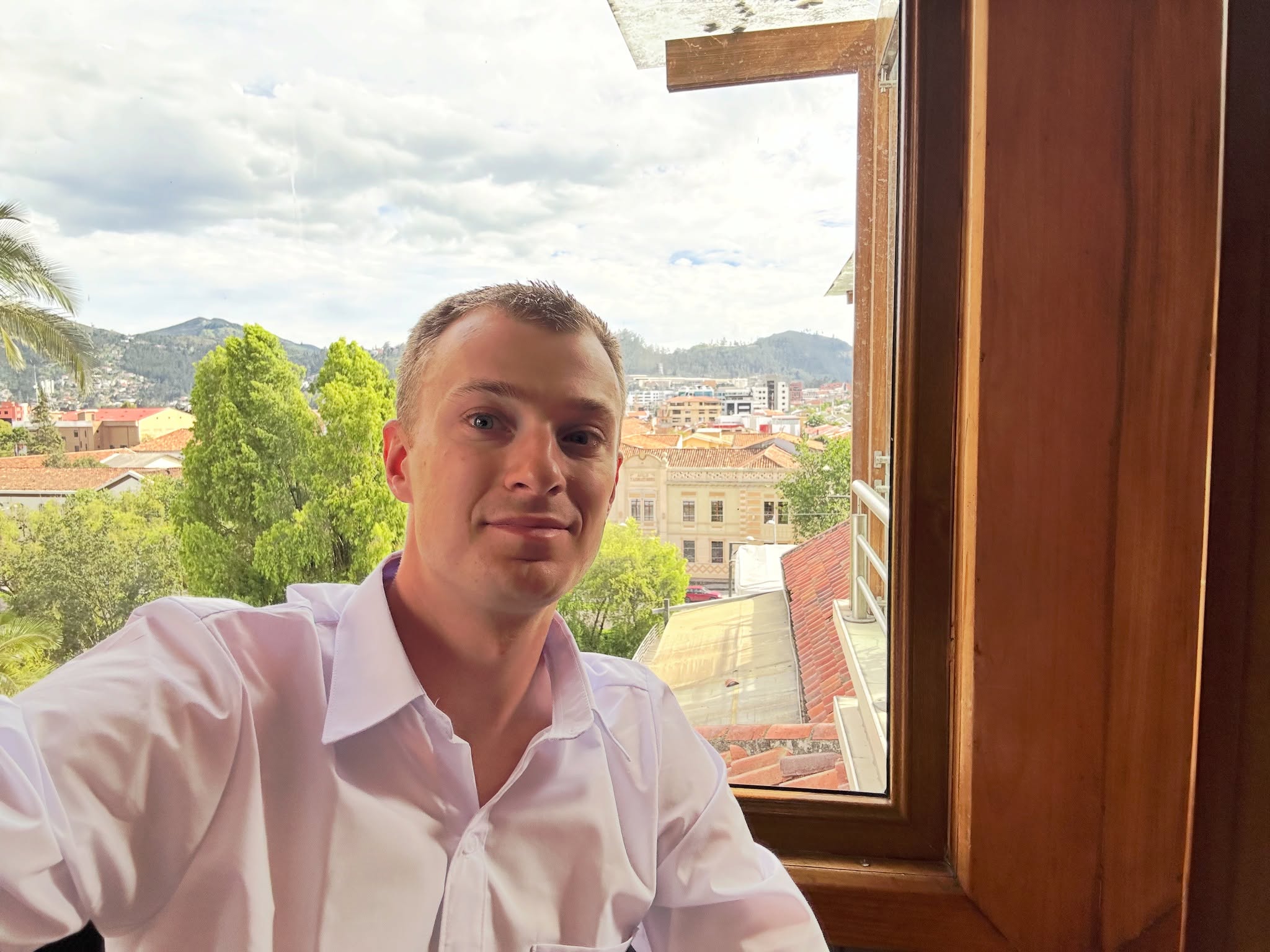
Chip Moreno — American Expat in Cuenca, Ecuador
Chip is the founder of EcuaPass (Ecuador visa services), FileAbroad (U.S. taxes for expats), EcuaInsure (health insurance), EcuadorTranslations, and CuencaExpat (daily news). He holds a B.S. in Computer Science from WGU, obtained his Ecuador Professional Visa in 2025, and is pursuing the IRS Enrolled Agent credential and an Ecuadorian insurance broker license.