Ecuador Real Estate: Decode 'Promesa de Compraventa' & Secure Your Cuenca Property
Navigate Ecuadorian property law with this expert guide. Understand every clause of the 'Promesa de Compraventa' to protect your investment as a foreign buyer.
Decoding the 'Promesa de Compraventa': A Clause-by-Clause Legal Analysis for Expat Buyers
Navigating the intricacies of Ecuadorian real estate transactions can feel like traversing a labyrinth, especially for those new to the country's legal framework. As an Ecuadorian lawyer with extensive experience guiding expatriates through property acquisitions here in Cuenca, I've seen firsthand how a well-drafted 'Promesa de Compraventa' (Promissory Agreement to Buy and Sell) can mean the difference between a secure investment and a costly legal battle. This foundational document is far more than a simple agreement; it is a binding contract governed by the Ecuadorian Civil Code that sets the stage for your entire transaction. This analysis will demystify this crucial agreement, clause by clause, injecting the practical, on-the-ground knowledge you need to proceed with confidence.
The Legal Weight of the 'Promesa de Compraventa'
Before dissecting the clauses, understand this: the 'Promesa de Compraventa' is not a mere letter of intent. As stipulated in Artículo 1570 del Código Civil, for a promissory agreement to be legally valid, it must be in writing, meet all legal requirements of a final contract, and specify a timeframe or condition for the final sale. It is a legally enforceable contract that obligates both parties to execute the final deed (Escritura Pública). The transaction is a two-step process: the 'Promesa' locks in the terms, and the 'Escritura' officially transfers the title, which is then recorded at the Registro de la Propiedad (Property Registry) to perfect your ownership.
A Clause-by-Clause Breakdown: What to Scrutinize
A professionally drafted 'Promesa de Compraventa' will contain several key clauses. Let's examine them with an expert eye.
1. Identification of Parties: 'Comparecientes'
This section identifies the "appearing parties"—the buyer(s) and seller(s).
-
Buyer ('Promitente Comprador'): Full name, nationality, marital status, and identification number (your passport number is legally sufficient).
-
Seller ('Promitente Vendedor'): Similar details. If the seller is married, their spouse must also sign, as marital property requires joint consent for alienation, a principle rooted in Artículo 142 del Código Civil.
-
Hyper-Specific Detail #1: Marital Status Verification. A common mistake is taking the seller's word on their marital status. Always insist on seeing an 'actualizada partida de matrimonio' (an updated marriage certificate) issued by the Registro Civil within the last 60 days. An older certificate is insufficient, as their status could have changed. This simple document, costing around $5, can prevent a future claim from an undisclosed spouse that could invalidate the entire sale.
2. Description of the Property: 'Objeto del Contrato'
This is the heart of the agreement, meticulously detailing the property.
-
Full Address & Legal Description: This must include the 'código catastral' (cadastral code) and the 'número de matrícula inmobiliaria' (property registration number).
-
Boundaries ('Linderos'): A precise description of the property's boundaries (North, South, East, West) and what they abut.
-
History of Title ('Antecedentes'): This section traces the property's ownership history, citing the specific previous Escritura Pública through which the current seller acquired title.
-
Expert Tip: Verbally verify the linderos during a physical walkthrough. It's not unheard of for fences or walls to be misplaced over time, and what's on paper must match reality.
3. Purchase Price and Payment Terms: 'Precio y Forma de Pago'
This clause outlines the financial agreement in United States Dollars (USD).
-
Total Purchase Price: Stated numerically and in writing to avoid ambiguity.
-
Earnest Money ('Arras'): A deposit is paid upon signing the 'Promesa'. It is crucial to define its nature. Per Artículo 1815 del Código Civil, if not specified otherwise, they are considered 'arras de retractación', meaning either party can back out—the buyer by forfeiting the deposit, the seller by returning double. A stronger contract will specify they are 'parte del precio y señal de confirmación' (part of the price and a sign of confirmation), making the contract more difficult to break.
-
Payment Schedule: Clear dates and amounts for all subsequent payments.
-
Hyper-Specific Detail #2: The 'Cláusula Penal' and Payment Method. For serious transactions, I advise clients to include a 'Cláusula Penal' (Penalty Clause) under Artículo 1592 del Código Civil. This is more powerful than simple 'arras'. It pre-establishes a significant financial penalty (e.g., 10-15% of the total purchase price) for any form of non-compliance, payable by the defaulting party. This strongly discourages breaches. Furthermore, for the final payment at the closing, never rely on a simple wire transfer. The standard, secure practice is for the buyer to present a 'cheque certificado' (certified check) from an Ecuadorian bank, issued to the seller, in the Notary's office as the Escritura is being signed.
4. Closing Timeline and Conditions: 'Plazo y Condiciones'
This sets the deadline and prerequisites for signing the final 'Escritura'.
-
Target Closing Date ('Plazo'): A specific date or timeframe (e.g., "within 90 days from the signing of this agreement").
-
Conditions Precedent: This is critical. It lists everything that must be accomplished before the final signing.
-
Hyper-Specific Detail #3: The Non-Negotiable 'Certificado de no Adeudar al Municipio'. A key condition that must be included is the seller's obligation to provide an updated 'Certificado de no Adeudar al Municipio' (Certificate of No Debt to the Municipality). This official document, which costs about $8 in Cuenca, proves that all property taxes (impuestos prediales) and municipal improvement fees are paid in full. Without this certificate, the Notary cannot legally proceed with the signing of the final Escritura. Failure to have this ready is one of the most common reasons for closing delays.
5. Seller's Representations and Warranties: 'Declaraciones y Saneamiento'
The seller makes legally binding declarations about the property's status.
-
Clear Title ('Libre de Gravámenes'): The seller declares the property is free from all liens, mortgages, lawsuits, and encumbrances.
-
Warranty ('Saneamiento por Evicción'): The seller legally warrants they are the rightful owner and will defend the buyer’s title against any third-party claims. This is a fundamental buyer protection under Ecuadorian law.
-
Hyper-Specific Detail #4: Independent Verification at the Registro de la Propiedad. Never trust the seller's declarations alone. The definitive proof is a freshly issued 'Certificado de Gravámenes y Tradición'. In Cuenca, you can request this at the Registro de la Propiedad office on Av. México y Av. de las Américas. It costs approximately $12 and typically takes 3 to 5 business days to process. A common mistake expats make is expecting an instant digital copy; you must submit the request in person and often return on the specified date to pick up the physical document. This certificate is your single most important due diligence document.
6. Expenses and Taxes: 'Gastos e Impuestos'
This clause specifies who pays which closing costs. The standard, legally-prescribed division is:
-
Seller Pays: Notary fees (50%), municipal capital gains tax ('Plusvalía'), and the property transfer tax ('Alcabala').
-
Buyer Pays: Notary fees (50%) and all final registration fees at the Property Registry.
-
Parties can agree to a different split, but it must be explicitly stated in the contract.
-
Expert Tip: The 'Plusvalía' tax can be contentious. Ensure the formula for its calculation is understood, as it's based on the increase in the municipal property valuation, not the sale price.
7. Governing Law and Dispute Resolution: 'Jurisdicción y Controversias'
- Governing Law: The contract is subject to the laws of Ecuador.
- Dispute Resolution: This clause will specify the jurisdiction of Cuenca's judges. It is highly advisable to add a clause requiring mandatory mediation ('mediación') as a first step before litigation, which can be a faster and less expensive way to resolve disputes.
Legal Checklist for Cuenca Expats
Before you sign anything:
- Obtain Independent Legal Counsel: Do not use the seller's lawyer.
- Verify Title with a Certificado de Gravámenes y Tradición: This is non-negotiable.
- Confirm Seller's Identity and Marital Status: Cross-reference their cédula (ID) and request an updated marriage certificate.
- Demand the Certificado de no Adeudar al Municipio: Ensure it's a condition for closing.
- Understand the 'Arras' and 'Cláusula Penal': Know the exact financial consequences of a default for both parties.
- Review the 'Uso de Suelo': For land purchases or commercial properties, get a certificate from the municipality confirming the zoning and permitted use.
⚠️ Legal Alert: When to Stop and Consult an Attorney Immediately
- If the seller resists providing any of the official certificates mentioned above.
- If the property title is held in the name of a deceased person (an 'sucesión indivisa'). The probate process must be fully completed before a legal sale can occur.
- If you are buying property in a designated "zona de seguridad nacional" (national security zone), typically near borders or coasts. As a foreigner, you may need special authorization from the Ministry of Defense, a process governed by regulations like the Acuerdo Ministerial No. 179. While Cuenca is not in such a zone, this demonstrates the layers of law that can affect foreign buyers.
- If there are un-permitted additions or constructions on the property. This can create significant problems with the municipality later.
Conclusion: From 'Promesa' to Secure Ownership
The 'Promesa de Compraventa' is the blueprint for your property purchase. By understanding its clauses, demanding proper documentation, and verifying every detail, you transform it from a source of anxiety into a tool of empowerment. Once all conditions in the 'Promesa' are met, you will proceed to the Notary to sign the final 'Escritura Pública', make the final payment, and receive the keys. Your lawyer will then handle the final, crucial step: registering your new deed at the 'Registro de la Propiedad', which officially makes you the legal owner of your piece of Ecuador.
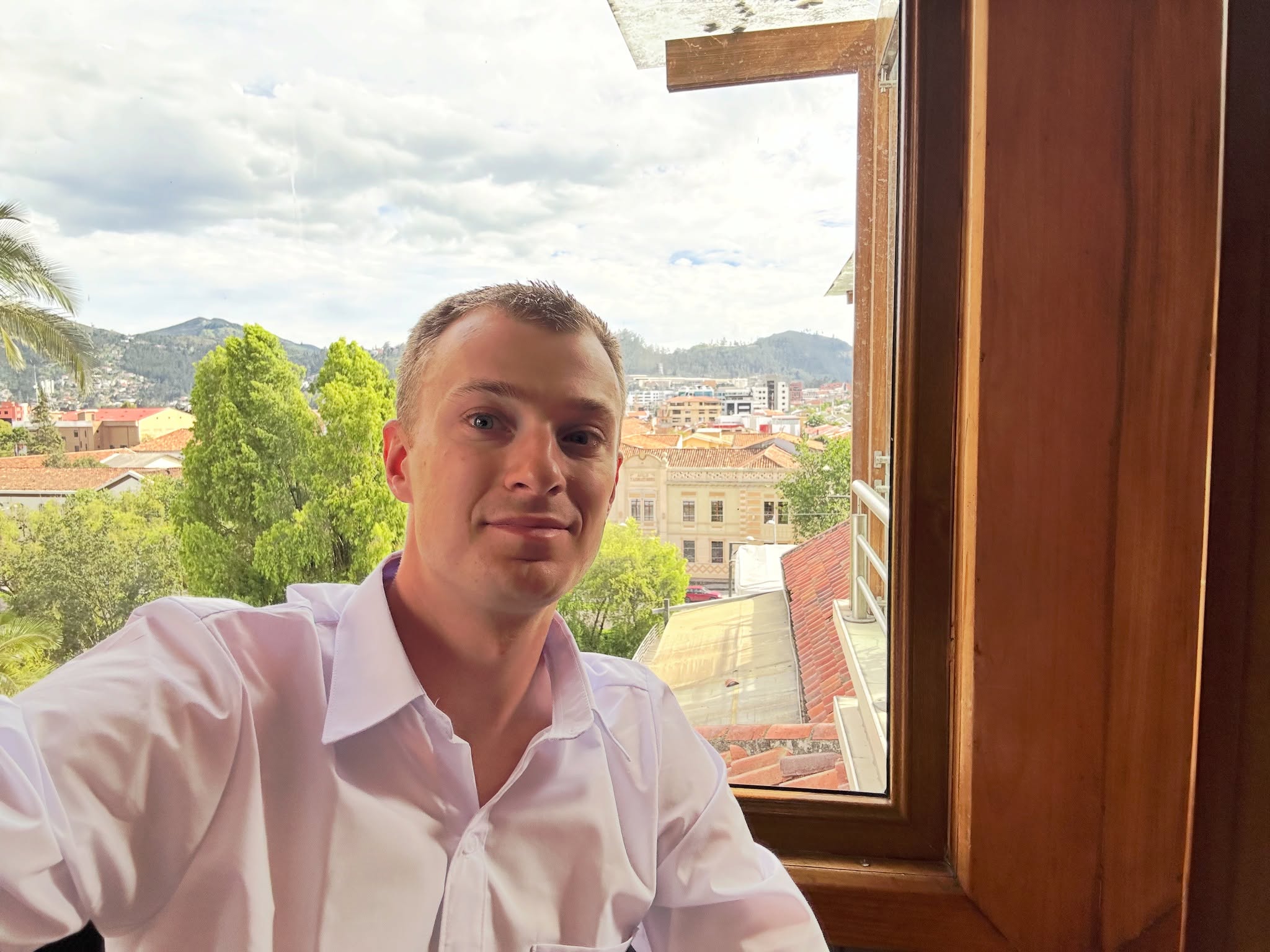
About the Author
Chip Moreno — American Expat in Cuenca, Ecuador
Chip is the founder of EcuaPass (Ecuador visa services), FileAbroad (U.S. taxes for expats), EcuaInsure (health insurance), EcuadorTranslations, and CuencaExpat (daily news). He holds a B.S. in Computer Science from WGU, obtained his Ecuador Professional Visa in 2025, and is pursuing the IRS Enrolled Agent credential and an Ecuadorian insurance broker license.