How Much Does it Cost to Buy Property in Ecuador? A Full Closing Cost Breakdown
Navigate Ecuador's property closing costs: Understand taxes like Alcabala, notary fees, registration, and seller taxes with this expert guide for buyers.
Calculating Closing Costs in Ecuador: A Breakdown of Taxes, Fees, and Notary Charges
Purchasing property in Ecuador, particularly in a vibrant expat hub like Cuenca, is an exciting prospect. However, beyond the advertised sale price lies a series of mandatory costs that are critical to understand. As an Ecuadorian lawyer with extensive experience guiding foreign nationals through real estate transactions, I have seen firsthand how a lack of precise information can lead to budget overruns and unnecessary stress. This guide will meticulously break down the closing costs, referencing specific laws and providing practical, on-the-ground advice to ensure your transaction is transparent, compliant, and predictable.
The Foundation: Understanding the Legal Framework
Property transactions in Ecuador are governed by a robust civil law framework. The primary legislation includes the Civil Code (Código Civil), which defines property rights, and the Organic Code of Territorial Organization, Autonomy, and Decentralization (COOTAD), which grants municipalities the authority to levy key property taxes. Notaries (Notarios) and Property Registrars (Registradores de la Propiedad) are public officials whose functions and fees are regulated by the Judicial Council (Consejo de la Judicatura), ensuring a standardized process.
Key Components of Ecuadorian Closing Costs
Closing costs in Ecuador are almost universally the responsibility of the buyer, although specific points can be negotiated. They are comprised of the following mandatory taxes and fees.
1. Municipal Transfer Tax (Impuesto de Alcabala)
This is the principal tax levied by the municipality on the transfer of real estate and is the largest single closing cost for the buyer.
- Calculation: The tax is 1% of the property's declared value. Crucially, as per Article 527 of the COOTAD, this is calculated on the higher of two values: the purchase price stated in the public deed (escritura pública) or the property's official cadastral valuation (avalúo catastral) on file with the municipality. This prevents under-declaration to evade taxes.
- Who Pays: The Buyer.
- Practical Application: On a property purchased for $200,000 with a cadastral value of $180,000, the Alcabala tax would be $2,000 (1% of the higher $200,000 value).
2. Provincial Tax (Impuesto de Plusvalía Provincial)
Often overlooked, this is a smaller tax collected for the provincial government. In Azuay, this is for the Consejo Provincial.
- Calculation: It is calculated based on a formula related to the cadastral value. While small, it is a required payment.
- Who Pays: The Buyer.
- Practical Application: This fee is typically modest, often between $20 and $150, depending on the property's value.
3. Property Registration Fees (Aranceles de Registro)
For a transfer of ownership to be legally binding and effective against third parties, the new deed must be inscribed in the local Property Registry (Registro de la Propiedad).
- Calculation: The fees are not a flat percentage but are set by a tiered schedule established by each municipality's ordinance. For example, in Cuenca, the fee for a $200,000 property is approximately $850. It is a common misconception to budget a simple percentage; always request a precise calculation based on the current fee schedule.
- Who Pays: The Buyer.
- Practical Application: Upon registration, you receive a Certificado de Inscripción, which is your official proof of title.
4. Notary Fees (Honorarios del Notario)
A notary is essential for drafting the escritura pública, verifying the identity of the parties, and ensuring all legal formalities are met.
- Calculation: Notary fees are also regulated by a national tiered schedule set by the Consejo de la Judicatura. For a $200,000 transaction, the notary fee would be approximately $973, plus the cost of certified copies (testimonios). The buyer is entitled to one certified copy within this fee; additional copies incur extra charges.
- Who Pays: The Buyer.
- Expert Tip: Always request a proforma of the notary fees before signing. This will itemize the main fee, the cost of copies, and other minor administrative charges.
5. Seller's Tax on Property Gains (Impuesto a la Utilidad o Plusvalía)
This is a municipal tax levied on the seller's profit from the sale. While it is the seller's responsibility, a savvy buyer must ensure it is paid, as an outstanding tax liability can create a lien on the property.
- Calculation: Governed by Article 556 of the COOTAD, this is a 10% tax on the capital gain. The "gain" is calculated by subtracting the purchase price (adjusted for inflation) from the sale price. The law provides for deductions based on the number of years the property was held.
- Who Pays: The Seller.
- Practical Application: If a seller bought a property for $100,000 five years ago and sells it for $150,000, the municipality will calculate the gain after adjustments and apply the 10% tax. The notary cannot proceed with the closing without proof this tax has been paid by the seller.
6. Real Estate Agency Commission (Comisión Inmobiliaria)
While a contractual cost rather than a legal one, this is a significant expense to be aware of.
- Calculation: Typically 3% to 5% of the property sale price, plus Value Added Tax (IVA). As of April 1, 2024, the IVA rate in Ecuador is 15%.
- Who Pays: Almost always the Seller, deducted from their proceeds at closing.
- Practical Application: On a $200,000 sale, a 4% commission would be $8,000, plus 15% IVA on that commission ($1,200), totaling $9,200.
Estimated Total Buyer Costs: A Real-World Example
For a property purchased in Cuenca for $200,000:
- Impuesto de Alcabala (1%): $2,000
- Provincial Tax (Estimate): $100
- Property Registration Fees (Approx.): $850
- Notary Fees (Approx.): $973
- Lawyer's Due Diligence & Document Prep (Minuta): $500 - $1,500 (Varies by complexity)
- Miscellaneous (Certificates, etc.): $50
Estimated Total Buyer's Closing Costs: Approximately $4,473 - $5,473
As a rule of thumb, a buyer should budget between 2.5% and 3.5% of the purchase price to comfortably cover all closing-related costs.
The Step-by-Step Closing Process
- Promesa de Compraventa (Promise to Buy and Sell): Once a price is agreed upon, a binding preliminary contract is signed, often at a notary. The buyer typically makes an earnest money deposit (10% is standard).
- Due Diligence: Your attorney will procure a Certificado de Gravámenes from the Property Registry. This is a crucial document that provides a complete history of the property, confirming the legal owner and revealing any existing liens, mortgages, or legal disputes.
- Obtaining Clearances: Your attorney or the seller must obtain a Certificado de no Adeudar al Municipio. This certificate, which costs around $7, proves that all municipal property taxes (impuestos prediales) for the current year are fully paid. A closing cannot proceed without it.
- Drafting the Minuta: Your lawyer will draft a Minuta, which is the legal template for the deed. It contains all the terms of the sale, legal descriptions of the property and parties, and tax declarations. This document is delivered to the notary.
- Closing at the Notary: The notary elevates the Minuta into a formal Escritura Pública. Both parties sign in the notary's presence, and the buyer makes the final payment.
- Registration and Final Title: The notary's office sends the signed escritura to the Property Registry for inscription. This final step legally transfers ownership. The process can take anywhere from a few days to a few weeks.
Common Expat Pitfalls to Avoid
- Under-Declaring the Sale Price: Some sellers may suggest declaring a lower price in the escritura to reduce their plusvalía tax. This is illegal and extremely risky for the buyer. It establishes a lower cost basis for you, creating a massive future tax liability when you eventually sell. It can also be grounds for annulling the sale.
- Ignoring Boundary Discrepancies: Do not assume fences or walls represent the legal property lines. For any property that is not in a modern subdivision, insist on a recent survey (levantamiento planimétrico) to verify that the physical boundaries match the legal description in the title. This is a frequent issue in the rural areas surrounding Cuenca.
- Forgetting the RUC: A foreigner who is not a resident with a cédula will need to obtain a taxpayer identification number (Registro Único de Contribuyentes or RUC) from the SRI (Ecuador's tax agency) before purchasing property.
- Using the Seller's Lawyer: While it may seem convenient, this is a clear conflict of interest. Always hire your own independent legal counsel to represent your interests exclusively.
Legal Checklist for Buyers in Ecuador
- [ ] Have you obtained and reviewed a current Certificado de Gravámenes confirming clear title?
- [ ] Have you seen the paid receipt for the current year's impuesto predial?
- [ ] Has the seller provided the Certificado de no Adeudar al Municipio?
- [ ] Does the declared sale price in the Minuta match the actual price you are paying?
- [ ] Have you verified the property's physical boundaries against the legal description?
- [ ] Do you have an RUC if you do not possess an Ecuadorian cédula?
⚠️ Legal Alert: When to Stop and Consult an Attorney Immediately
Halt the process and seek expert legal advice if:
- The seller cannot produce a clear Certificado de Gravámenes.
- There are unresolved inheritances, divorces, or disputes associated with the property's ownership history.
- The seller pressures you to make large cash payments or to under-declare the property's value.
- The property is part of an unapproved subdivision or has zoning restrictions that conflict with your intended use.
- You are asked to sign documents in Spanish that you do not fully understand and have not been reviewed by your own attorney.
Navigating property law in Ecuador requires diligence and expert guidance. By understanding these costs and following a structured, legally sound process, your dream of owning a home in Cuenca can be a reality, free of unforeseen financial or legal complications.
Disclaimer: This article provides general information and does not constitute legal advice. Property laws and fees are subject to change. Always consult with a qualified Ecuadorian attorney for advice specific to your situation.
About the Author
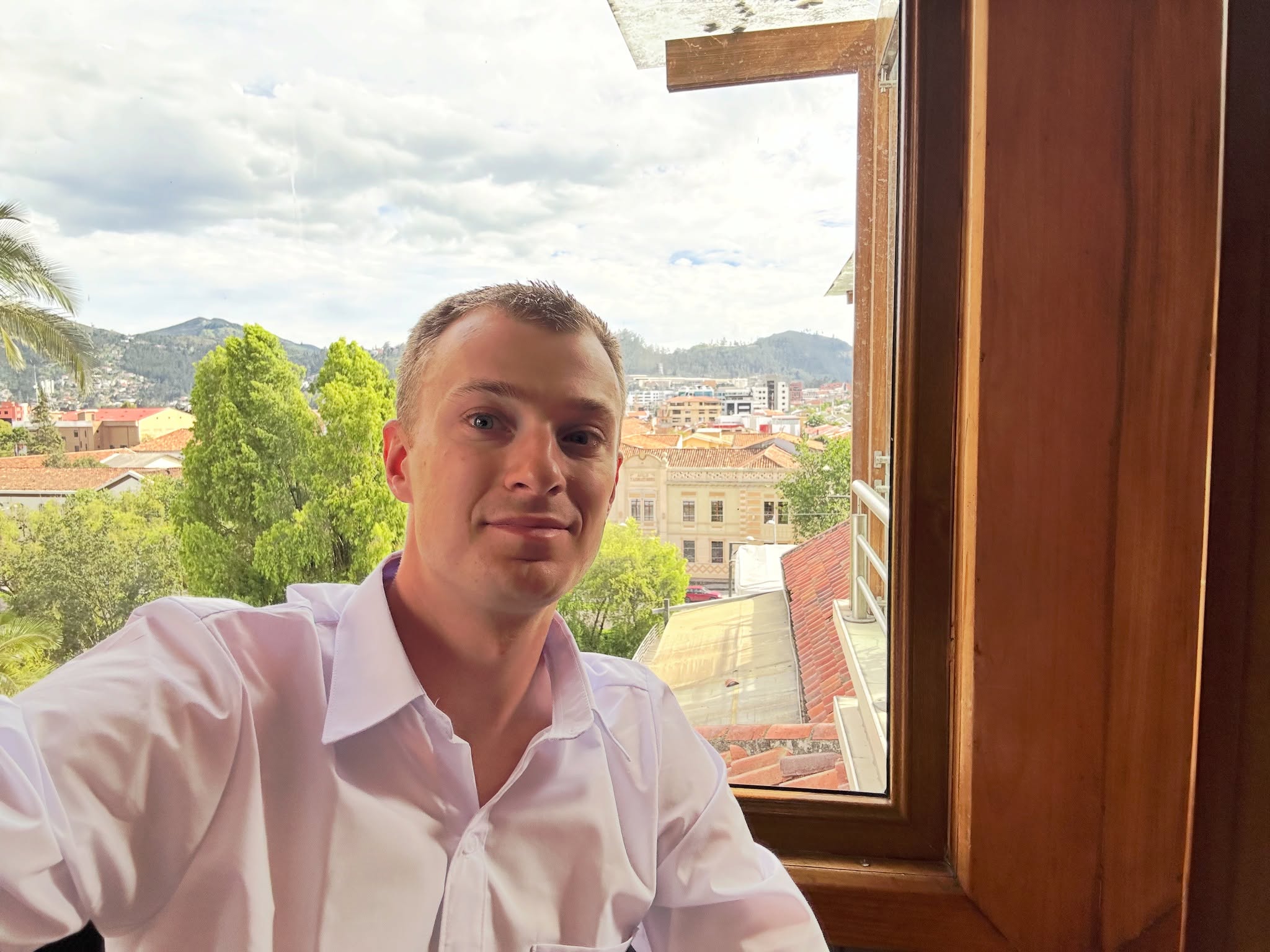
Chip Moreno — American Expat in Cuenca, Ecuador
Chip is the founder of EcuaPass (Ecuador visa services), FileAbroad (U.S. taxes for expats), EcuaInsure (health insurance), EcuadorTranslations, and CuencaExpat (daily news). He holds a B.S. in Computer Science from WGU, obtained his Ecuador Professional Visa in 2025, and is pursuing the IRS Enrolled Agent credential and an Ecuadorian insurance broker license.