How to Buy Property in Cuenca, Ecuador: A Lawyer's Guide to Real Estate Terms & Process
Confused by Ecuadorian real estate terms? This lawyer's glossary demystifies 'Inmueble,' 'Escritura Pública,' 'Registro de la Propiedad,' and more for Cuenca pr
Navigating Cuenca's Property Market: An Ecuadorian Lawyer's Glossary of Real Estate Terms
As an Ecuadorian lawyer based here in the beautiful city of Cuenca, I’ve guided countless expatriates through the intricacies of the local real estate market. The dream of owning a home in the Andes is powerful, but it often collides with a wall of Spanish legal terminology that can be intimidating. My goal is to dismantle that wall, equipping you with the precise knowledge to navigate your property purchase with confidence and, most importantly, in full compliance with Ecuadorian law.
This glossary is more than a simple translation list; it's a strategic guide. Understanding these terms is fundamental to ensuring your transaction is transparent, secure, and legally ironclad.
The Foundation of Your Purchase: Key Terminology
Let's begin with the building blocks of any property transaction in Ecuador.
- Inmueble: The general legal term for "real estate" or "property," encompassing land and any permanent structures (edificaciones) upon it.
- Propiedad: Translates to "property" or "ownership." It refers to both the physical asset and the legal right to possess and control it, as defined in the Código Civil.
- Escritura Pública de Compraventa: This is the "Public Deed of Sale." It is the single most important document, formally transferring ownership. Once signed before a Notario and registered, it becomes your definitive Título de Propiedad (Title Deed).
- Registro de la Propiedad: The "Property Registry." This is the official government entity where all Escrituras Públicas must be inscribed to be legally effective against third parties. It is the only source of truth for legal ownership.
- Catastro Municipal: The "Municipal Cadastre." This is the municipality's technical record of all properties, detailing boundaries, area, construction details, and the official assessed value (avalúo catastral). Before purchase, you or your attorney must obtain the Ficha Catastral (Cadastral Information Sheet), which confirms these details.
- Impuesto Predial: The annual "Property Tax." This is paid to the municipality and is calculated based on the avalúo catastral. Always verify that the seller is current on these payments before closing.
- Avalúo: An "Appraisal" or "Valuation." There are two types: the avalúo catastral (for tax purposes) and the avalúo comercial (a commercial appraisal to determine market value).
Understanding the Transaction: Roles and Documents
When you buy a property, you’ll encounter various parties and essential documents that govern the process.
- Vendedor: The "Seller."
- Comprador: The "Buyer."
- Promesa de Compraventa: This is the "Promise to Buy and Sell Agreement." This preliminary, legally binding contract locks in the terms of the sale, including price, deadlines, and conditions. It is far more formal than a simple offer sheet and should always be drafted by an attorney.
- Arras: This is the "Earnest Money" or deposit. Its legal treatment is critical and is governed by Artículo 1803 del Código Civil Ecuatoriano. Be explicit about whether the arras are:
- Confirmatorias: Part of the final price. If the buyer defaults, they are forfeited. If the seller defaults, they must typically be returned twofold.
- Penitenciales: A penalty allowing either party to withdraw from the contract by forfeiting (buyer) or returning double (seller) the amount. The specific terms must be defined in the Promesa de Compraventa.
- Escritura Pública de Compraventa: As mentioned, this is the final "Public Deed of Sale" signed before a Notario that legally transfers the property.
- Notario Público (Notary Public): A specialized lawyer and public official who provides public faith to legal acts. The Notario verifies the identity of the parties, confirms the legality of the transaction, and formalizes the Escritura. Hyper-Specific Detail: A common mistake is assuming the Notario handles the final property registration. They do not. After signing, your lawyer must take the Escritura to the Registro de la Propiedad for inscription; the sale is not legally complete until this final step.
- Impuesto a la Plusvalía: This is the municipal "Capital Gains Tax," levied on the profit the seller makes. While this is the seller’s responsibility, a savvy buyer is aware of it, as a seller’s unexpected tax liability can sometimes complicate or delay a closing.
Property Status and Legalities
Understanding the legal standing of a property is paramount. Your attorney’s primary job is to verify these details.
- Gravamen / Carga / Hipoteca: An "Encumbrance," "Lien," or "Mortgage." This is any claim against the property, such as an unpaid loan, a legal embargo, or a court-ordered restriction that can prevent its sale.
- Certificado de Gravámenes: The "Lien Certificate." This is the official document issued by the Registro de la Propiedad that confirms whether a property is Libre de Gravamen ("Free of Encumbrances") or not. Hyper-Specific Detail: This certificate is non-negotiable for closing. In Cuenca, obtaining it currently costs approximately $15.00 and it is only valid for a limited time (typically 30-60 days). Requesting it too early in the process means you'll have to pay for it again before signing.
- Predio: A technical term for a "Plot of Land" or "Property," often used in cadastral and registry documents.
- Linderos: The "Property Boundaries." The Escritura must contain a precise description of the linderos, which should match the records in both the Catastro Municipal and the Registro de la Propiedad.
- Servidumbre: An "Easement." This is a legal right for a third party to use a portion of your property for a specific purpose (e.g., servidumbre de paso for access). Any easements must be documented in the property's title history.
The Expat Buyer: Essential Documentation
As a foreign buyer, you will need the following:
- Pasaporte: Your valid "Passport" with a current entry stamp or visa is your primary identification.
- Visa: While you can purchase property on a tourist stamp, having a valid residency visa simplifies opening bank accounts and other financial transactions.
- RUC (Registro Único de Contribuyentes): The "Unique Taxpayer Registry" number. Foreign individuals buying property are generally required to obtain a RUC from the SRI (Ecuador's IRS). This is a mandatory step for the Notario to include in the Escritura.
- Declaración Juramentada de Licitud de Fondos: A "Sworn Declaration of Lawful Funds." Due to anti-money laundering regulations, you will be required to sign a declaration before the Notario stating that the funds for the purchase originate from legal sources.
Legal Checklist for Cuenca Expats
Before you sign the Promesa de Compraventa, your attorney must complete this due diligence:
- Title Investigation: Obtain an updated Certificado de Gravámenes from the Registro de la Propiedad to verify clear title. For a complete history, a lawyer will often request a Certificado de Historial de Dominio to see the chain of ownership.
- Municipal Solvency: Hyper-Specific Detail: The Notario will refuse to authorize the Escritura without a Certificado de no adeudar al Municipio. This certificate proves the seller has paid all property taxes and other municipal fees. Obtaining this can take several days, so it must be requested well in advance of the closing date to avoid costly delays—a common oversight.
- Review the Promesa de Compraventa: This contract must be meticulously drafted, clearly defining the property, price, payment schedule, penalties, and the nature of the arras.
- Verify Seller's Authority: Confirm the person signing is the registered owner. If it's a company, review its legal standing. If using a Poder General (Power of Attorney), your lawyer must verify it is properly registered and grants the specific authority to sell.
- Arrange Funds Transfer: Use official banking channels. Be prepared for your Ecuadorian bank to request documentation proving the source of funds transferred from abroad.
- Signing and Registration: After signing the Escritura Pública at the Notaría, the final and most crucial step is its registration at the Registro de la Propiedad. Only upon registration is your ownership legally perfected and protected.
⚠️ Legal Alert: When to Stop and Consult Your Attorney
Immediately halt proceedings and do not transfer funds if:
- The seller's name does not match the name on the official title documents from the Registro de la Propiedad.
- The property description or boundaries (linderos) are inconsistent across different documents.
- The seller pressures you to sign a simple private document instead of a formal Promesa de Compraventa or to pay a large sum in cash.
- The Certificado de Gravámenes shows an existing mortgage (hipoteca), lien (embargo), or other unresolved legal issue.
Navigating a real estate transaction in Ecuador requires more than just language skills; it demands a precise understanding of the local legal framework. By arming yourself with this knowledge, you transform from a tourist into an informed buyer, ensuring your investment in Cuenca is both a joy and a secure asset for years to come.
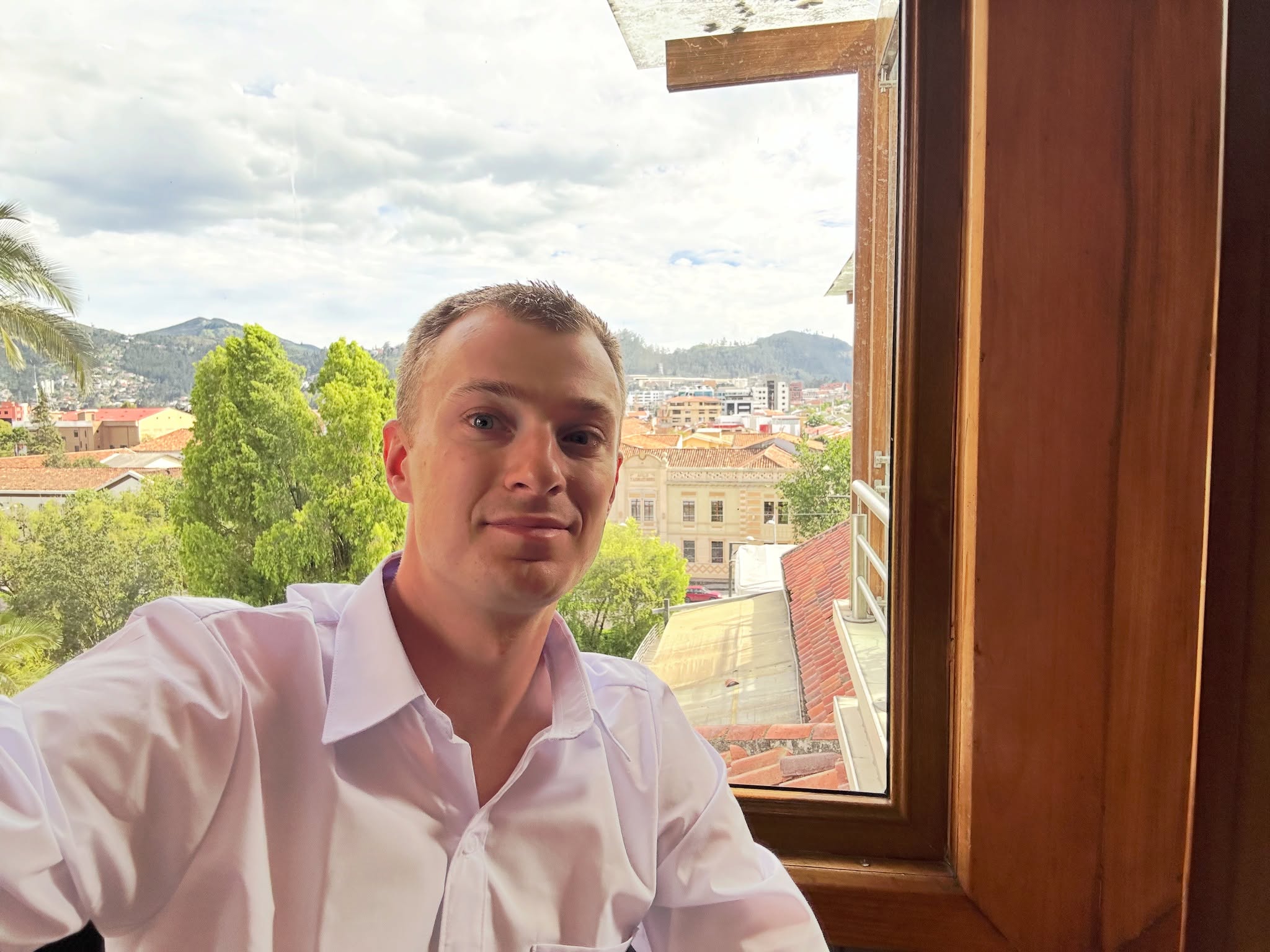
About the Author
Chip Moreno — American Expat in Cuenca, Ecuador
Chip is the founder of EcuaPass (Ecuador visa services), FileAbroad (U.S. taxes for expats), EcuaInsure (health insurance), EcuadorTranslations, and CuencaExpat (daily news). He holds a B.S. in Computer Science from WGU, obtained his Ecuador Professional Visa in 2025, and is pursuing the IRS Enrolled Agent credential and an Ecuadorian insurance broker license.