How to Transfer Property Title in Cuenca, Ecuador: A Foreign Buyer's Complete Guide
Navigate Cuenca's property title transfer with this expert guide for foreign buyers. Understand Escritura Pública, Cédula, IESS, and crucial legal steps for sec
Navigating the Transfer of Property Title in Cuenca: A Comprehensive Guide for Foreign Buyers
Owning property in the UNESCO World Heritage city of Cuenca is an achievable dream for many foreign residents. However, the legal process of transferring ownership—known as the inscripción de la transferencia de dominio—is governed by a strict legal framework and requires meticulous execution. As a legal professional with extensive experience guiding expats through real estate transactions in Cuenca, I have crafted this definitive guide to demystify the process, highlight critical local nuances, and ensure your investment is secure.
The transfer of property ownership in Ecuador is primarily regulated by the Código Civil (Civil Code), the Ley Notarial (Notary Law), and the Ley del Sistema Nacional de Registro de Datos Públicos. The cornerstone of any property transfer is the Escritura Pública de Compraventa (Public Deed of Sale), a solemn act executed before a Notary Public (Notario) which, once registered, provides indisputable proof of ownership.
The Essential Steps: A Detailed Breakdown
The transfer process can be broken down into five distinct, sequential phases.
Step 1: The Preparatory Agreement (Promesa de Compraventa)
While not legally required to transfer title, a Promesa de Compraventa (Promise to Buy and Sell Agreement) is a highly advisable preliminary contract. Executed as a private document or a public deed, it binds both parties to the terms of the future sale. This document is your primary safeguard, detailing the price, payment schedule, property description, and the deadline for signing the definitive Escritura Pública.
- Expert Insight: Ensure this document includes a penalty clause (cláusula penal) that specifies financial repercussions for either party defaulting on the agreement. This provides a powerful incentive for compliance and a clear remedy in case of a breach.
Step 2: Pre-Closing Due Diligence (Estudio de Títulos)
This is the most critical pre-emptive phase. Before any funds are irrevocably committed, your attorney must conduct a thorough title search and property investigation. This is not a step to be rushed or overlooked.
- Essential Verifications:
- Certificado de Gravámenes y Prohibiciones: This is the definitive document from the Cuenca Property Registry (Registro de la Propiedad del Cantón Cuenca). For a current fee of approximately $15.00, it confirms the property is free of mortgages (hipotecas), liens (gravámenes), court-ordered sales prohibitions (prohibiciones de enajenar), and other encumbrances. We also request a Certificado de Historial de Dominio to trace the property's ownership history.
- Municipal Solvency Certificate (Certificado de no adeudar al Municipio): This is a non-negotiable prerequisite for the notary. It's obtained from the GAD Municipal de Cuenca and must confirm that all property taxes (impuesto predial) and, crucially, any special improvement contributions (contribuciones especiales por mejoras) are paid in full. A common mistake is presenting only the property tax receipt, which is insufficient and will cause delays.
- Seller's Title Deed (Escritura Anterior): We meticulously review the seller's registered deed to confirm their legal standing and ensure the property's measurements and boundaries (linderos) match the official cadastral records (ficha catastral).
Step 3: The Draft Deed (Minuta) and Notarization (Escritura Pública)
Once due diligence confirms a clean title, your lawyer drafts a detailed contract called a minuta. This document contains all the legal clauses, declarations, and specifics of the transaction. It is the blueprint for the final deed.
The minuta is then taken to a notary of your choice, who reviews it for legal compliance and elevates it to an Escritura Pública de Compraventa. All parties—buyer, seller, and their spouses, if applicable—must sign in the notary's presence.
- Documents Required by the Notary:
- Valid identification (original passport for foreigners, cédula for Ecuadorians).
- The aforementioned Certificado de Gravámenes y Prohibiciones and the Certificado de no adeudar al Municipio.
- Proof of payment for relevant taxes (see Step 4).
- Formulario de Licitud de Fondos: For any transaction exceeding $10,000, both buyer and seller are legally required to sign a "Lawful Origin of Funds" declaration for the UAFE (Ecuador's Financial and Economic Analysis Unit). This is a mandatory anti-money laundering measure.
Step 4: Payment of Transfer Taxes and Fees
Before the deed can be registered, all associated taxes must be paid. The proofs of payment are attached to the Escritura Pública.
- Impuesto de Alcabala: This is the primary transfer tax, paid by the buyer. As mandated by the Código Orgánico de Organización Territorial, Autonomía y Descentralización (COOTAD), its rate in Cuenca is 1% of the sale price or the municipal property valuation (avalúo catastral), whichever is higher.
- Impuesto a la Plusvalía: This is a municipal tax on the "extraordinary" capital gain, which is the seller's responsibility. Its calculation is complex, but it is a prerequisite for closing.
- Provincial and Registration Fees: Additional minor fees are payable to the Provincial Council (Consejo Provincial) and the Property Registry itself.
- Notary Fees (Tasas Notariales): These are calculated on a sliding scale based on the property's value, as set by the national Council of the Judiciary.
Step 5: Registration at the Property Registry (Inscripción en el Registro de la Propiedad)
This is the final, conclusive step that legally establishes you as the new owner. Your attorney will submit the complete Escritura Pública, along with all original tax receipts and certificates, to the Registro de la Propiedad del Cantón Cuenca.
- The Process: The registrar (Registrador) reviews the entire file for legal conformity. Upon approval, the transfer is officially inscribed in the public record.
- Outcome: The process concludes when the Registry returns the original Escritura Pública with the official registration stamps and notations. This document is now your official, incontestable Título de Propiedad (Title Deed).
Legal Checklist for Cuenca Expats
- Engage Legal Counsel Early: Do not sign any documents or transfer any funds without representation.
- Verify Seller's Marital Status: Under Ecuadorian law, if the seller is married, their spouse must also sign the deed, unless the property is registered as personal property (bien propio).
- Understand Capital Gains Implications: If you sell the property in the future, you will be subject to capital gains taxes. Keep meticulous records of your purchase price and any capital improvements.
- Plan for Closing Costs: A safe estimate for total closing costs (including all taxes, notary fees, and legal fees) is typically between 2% and 4% of the purchase price.
⚠️ Legal Alert: When to Stop and Consult an Attorney Immediately.
While legal counsel is essential from the start, certain red flags demand an immediate halt to proceedings:
- The seller cannot produce an up-to-date Certificado de Gravámenes or pressures you to accept an old one.
- Discrepancies arise between the property's physical boundaries and the legal description in the deed (problemas de linderos).
- The property is part of an undivided inheritance (sucesión ilíquida), which requires a separate and complex legal process before it can be sold.
- You are asked to declare a lower price on the Escritura Pública than what you are actually paying. This is illegal, constitutes tax fraud, and can create significant legal and financial problems for you in the future.
Navigating the property transfer process in Cuenca is straightforward when handled with professional diligence. By understanding these specific legal requirements and local procedures, you can ensure a secure, transparent, and successful acquisition of your new home or investment.
Ready to secure your dream property in Cuenca? We offer a complimentary initial consultation to discuss your specific real estate transfer needs and ensure your legal rights are protected every step of the way. Schedule your free consultation today.
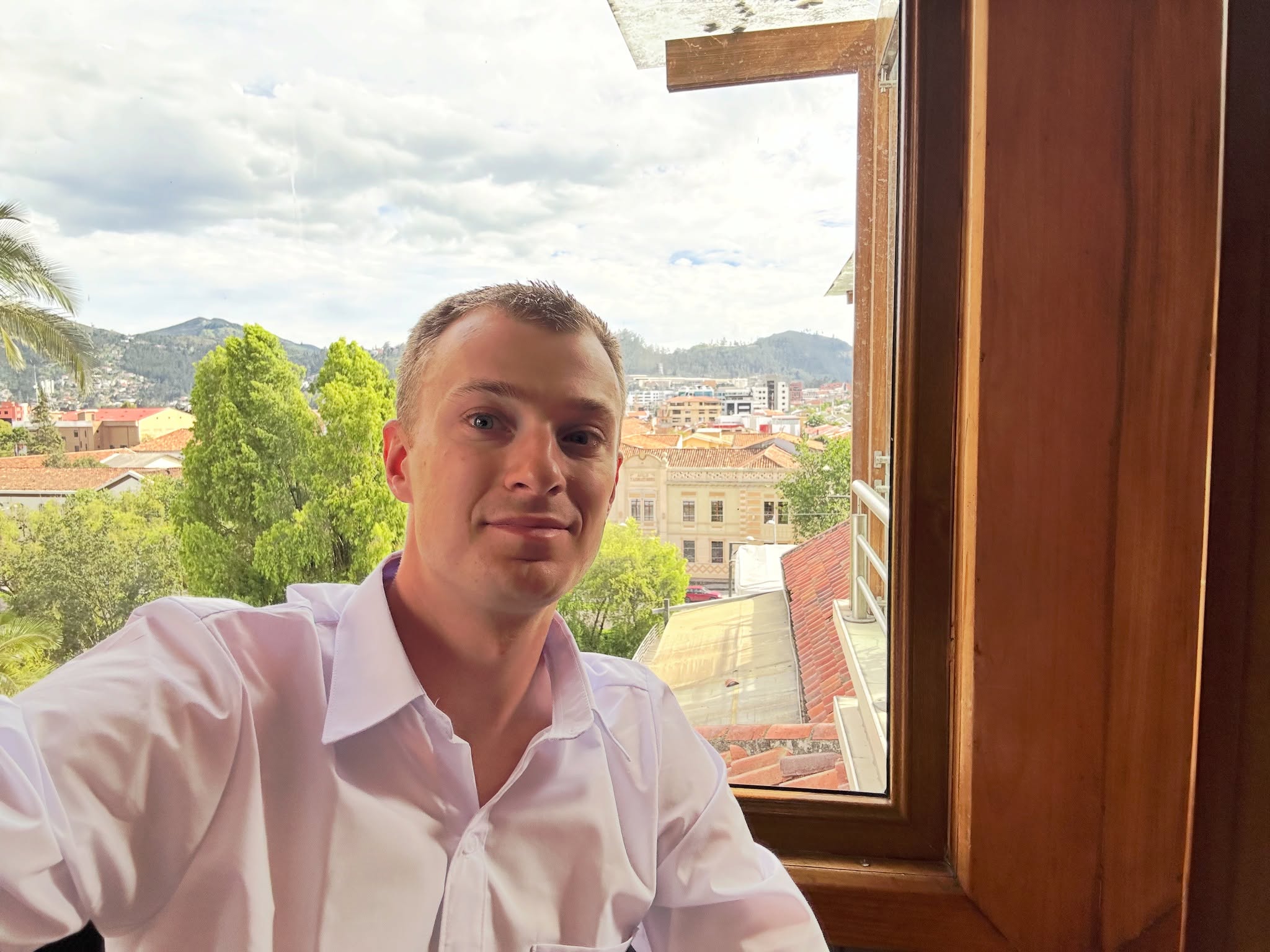
About the Author
Chip Moreno — American Expat in Cuenca, Ecuador
Chip is the founder of EcuaPass (Ecuador visa services), FileAbroad (U.S. taxes for expats), EcuaInsure (health insurance), EcuadorTranslations, and CuencaExpat (daily news). He holds a B.S. in Computer Science from WGU, obtained his Ecuador Professional Visa in 2025, and is pursuing the IRS Enrolled Agent credential and an Ecuadorian insurance broker license.