Ecuador Dependent Visas: Who is 'Immediate Family' Under LOMH?
Confused about 'immediate family' for Ecuador dependent visas? This expert legal guide details spouse, children, and parent qualifications under the LOMH and Re
Defining "Immediate Family" for Dependent Visas in Ecuador: An Expert Legal Guide
Navigating Ecuador's immigration system requires precision, especially when bringing loved ones to join you. As an Ecuadorian lawyer with extensive hands-on experience in Cuenca, I’ve seen firsthand how a misunderstanding of who qualifies as an "immediate family member" can derail a visa application. Generic advice often misses the crucial details that make the difference between approval and denial.
This guide provides an authoritative breakdown of dependent visas, grounded in the primary governing legislation: the Ley Orgánica de Movilidad Humana (LOMH) and its implementing Reglamento (Regulation).
Who Qualifies as an Immediate Family Member?
The legal foundation for dependent visas is family unification, or amparo. Artículo 46 of the LOMH clearly defines who can be sponsored by a primary visa holder. The following individuals are considered part of your immediate family nucleus:
- Spouse or Partner in a Civil Union (Unión de Hecho): This applies to legally recognized marriages and civil unions registered in Ecuador. A foreign marriage certificate is valid, but a foreign partnership certificate may not be automatically recognized without undergoing the Unión de Hecho registration process locally.
- Minor Children (Under 18 Years of Age): This includes your biological and legally adopted children over whom you have parental authority (patria potestad).
- Adult Children with Disabilities: Ecuadorian law is profoundly inclusive here. An adult child of any age with a certified disability that renders them financially or physically dependent on you qualifies. This requires specific medical and legal proof.
- Dependent Parents or Grandparents: Your parents, your spouse's parents, or the grandparents of either party can qualify, provided you can unequivocally prove their financial dependency on you.
- Minor Siblings (Under 18 Years of Age): Unmarried siblings under 18 who are under your legal charge and financial care can also be included.
The Crucial Element: Proving the Relationship and Dependency
While the law defines the categories, the Ministry of Foreign Affairs and Human Mobility (Ministerio de Relaciones Exteriores y Movilidad Humana) requires meticulous documentation. The specific procedural requirements are often detailed in internal regulations, such as the Acuerdo Ministerial No. 0000055.
For Spouses and Partners (Unión de Hecho):
- Marriage Certificate: If married abroad, the certificate must be apostilled (or legalized, depending on the country) and translated into Spanish by a court-certified translator (perito traductor) in Ecuador. If married in Ecuador, only the certificate from the Registro Civil is needed.
- Civil Union Certificate (Acta de Unión de Hecho): To sponsor a partner, you must first formally register the civil union at an Ecuadorian Registro Civil. This is a legal process in itself, requiring two witnesses and proof of cohabitation, and cannot be done casually.
For Children:
- Birth Certificate: Must clearly show the parent-child relationship. All foreign birth certificates require an apostille and certified translation.
- Custody Orders: If you have sole custody of a child, you will need the apostilled court order. If the other parent is not traveling, a notarized and apostilled travel authorization is often required.
- Proof of Disability: For an adult dependent child, you'll need a certificate from the Ecuadorian Ministry of Public Health (Ministerio de Salud Pública) or CONADIS (Consejo Nacional para la Igualdad de Discapacidades) confirming the disability and level of dependency. Foreign medical reports alone are insufficient.
For Dependent Parents and Grandparents:
This is the most scrutinized category. Proving dependency is not merely about sending money. Artículo 56 of the Reglamento a la LOMH specifies that the applicant must demonstrate the necessity of the support.
- Birth Certificates: You need a chain of apostilled birth certificates to prove the lineage (e.g., your birth certificate showing your parent's name).
- Proof of Financial Dependency: This is where many applications fail. You must provide compelling evidence, which should include:
- Bank Records: Proof of consistent money transfers over at least the last six months.
- A Sworn Declaration (Declaración Juramentada): This is a powerful, experience-based tool. You and your dependent parent(s) must go before an Ecuadorian notary and formally swear that they depend on you for their livelihood and do not have sufficient independent means of support. This document carries significant legal weight.
- Proof of Sponsor's Income: The primary visa holder must demonstrate sufficient income to support all dependents. This typically requires an Ecuadorian bank certificate (certificado bancario) showing a stable balance over several months.
General Requirements for All Dependents:
- Passport: Valid for at least six months.
- Criminal Background Check: An apostilled federal/national level background check from any country where the applicant has lived for the past five years. The current fee for processing this document at the Ministry in Ecuador is approximately $50.
- Visa Application and Fee: The application form, completed online, and payment of the government fees (approximately $50 for the application and $200-$400 for the visa itself, depending on the type).
- Proof of Health Insurance: All residents are required to have public or private health insurance.
Hyper-Specific Expert Tip: A common mistake made at the Registro Civil office in Cuenca (on Av. Remigio Crespo) is bringing a foreign document for translation. The Registro Civil does not provide translation services. You must first find a perito traductor certified by the Consejo de la Judicatura (a list is available online, but can be outdated) and then present the translated and original apostilled document. Not doing this in the correct order will halt your process.
⚠️ Legal Alert: When to Stop and Consult an Attorney
Pause your DIY application and seek professional legal counsel immediately if:
- You are trying to sponsor a relative not explicitly listed, such as a non-disabled adult child, an aunt, or a cousin. The LOMH is strict, and such cases are almost always denied without a compelling humanitarian reason.
- Proving financial dependency is not straightforward. If your parents receive a small pension or have other minor income sources, this complicates the declaración juramentada and requires careful legal structuring.
- There are any name discrepancies on official documents. Even minor variations between a birth certificate and a passport can lead to rejection and require a judicial process to rectify.
- You need to register a Unión de Hecho. This is a formal legal act, not just a document signing. An attorney can ensure the process is done correctly to be valid for immigration purposes.
- Your dependent has a previous immigration infraction in Ecuador. This must be resolved before any new application can be approved.
Conclusion
Successfully bringing your family to Ecuador hinges on understanding and respecting the specificity of its laws. By preparing meticulous, legally sound documentation that proves both the relationship and any required dependency, you can confidently navigate the process. The law is designed to support family unity, but the burden of proof rests entirely on the applicant.
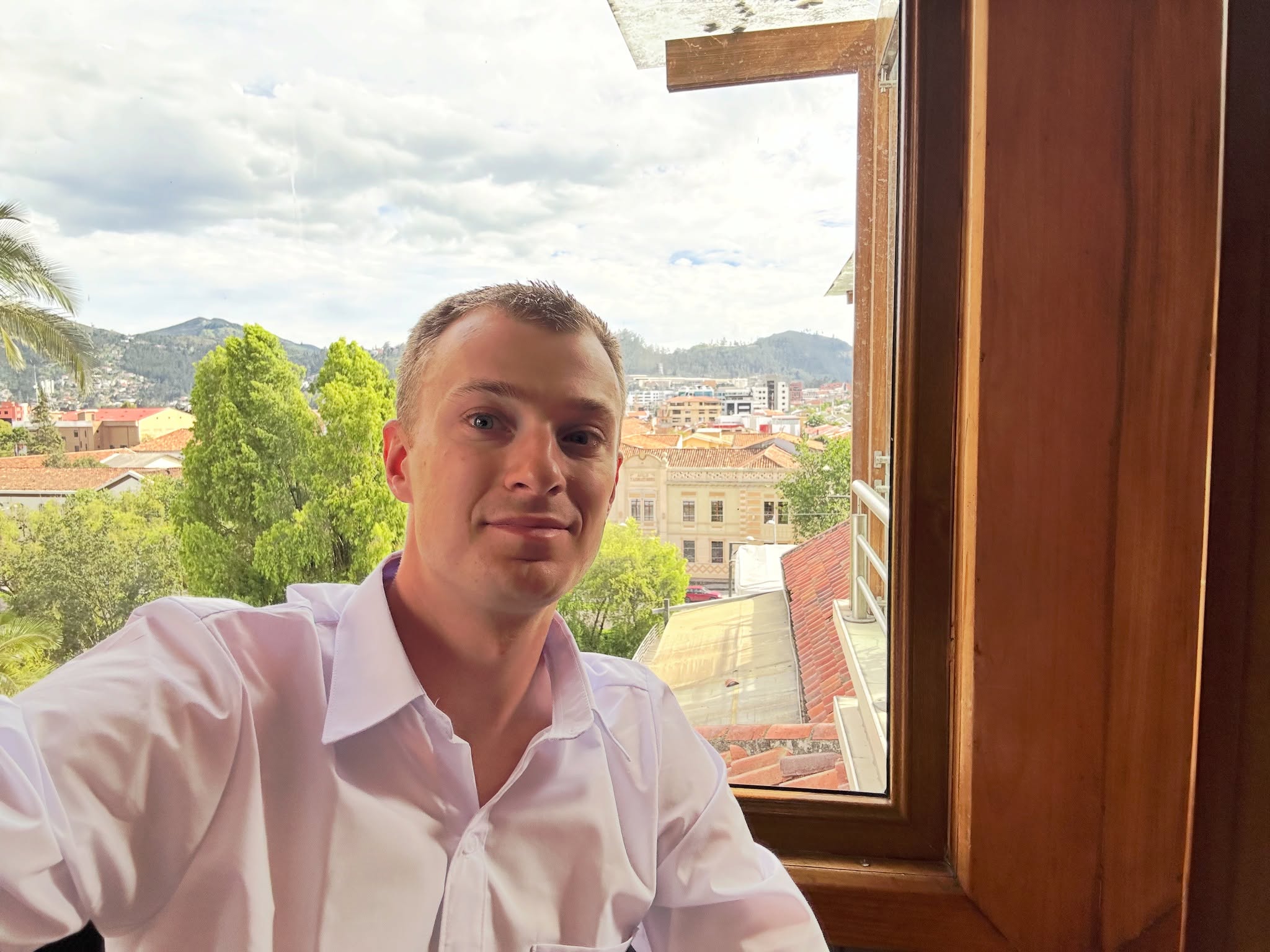
About the Author
Chip Moreno — American Expat in Cuenca, Ecuador
Chip is the founder of EcuaPass (Ecuador visa services), FileAbroad (U.S. taxes for expats), EcuaInsure (health insurance), EcuadorTranslations, and CuencaExpat (daily news). He holds a B.S. in Computer Science from WGU, obtained his Ecuador Professional Visa in 2025, and is pursuing the IRS Enrolled Agent credential and an Ecuadorian insurance broker license.