Ecuador Visa Health Screening: Cuenca Expat's Step-by-Step Legal Guide
Confused by Ecuador's mandatory health screening for visas & residency? This Cuenca expat guide from a legal expert demystifies the process, requirements, and p
Navigating Ecuador's Health Screening for Visa and Residency Applications: A Cuenca Expat's Guide
As an Ecuadorian lawyer with extensive experience assisting expats in Cuenca, I understand that the immigration process can be a labyrinth of legal requirements. One of the most critical steps, often fraught with confusion, is the mandatory health screening. This is not an arbitrary bureaucratic hurdle; it is a legal requirement grounded in Ecuador's public health policy, designed to protect both the nation and the applicant. My goal is to provide a definitive, legally precise guide to demystify this procedure.
The core legal authority for this requirement stems from the Ley Orgánica de Movilidad Humana (LOMH) and its implementing Reglamento (Regulations). Specifically, Article 38 of the Reglamento establishes that a foreign national may be deemed inadmissible if they have a contagious disease that constitutes a risk to public health. The health screening serves as the primary mechanism to verify compliance with this mandate.
Who Needs a Health Screening?
A health screening is a standard, non-negotiable requirement for all permanent residency (residencia permanente) applications. For temporary residency (residencia temporal) visas, the requirement varies:
- Applying from within Ecuador: If you are in Ecuador on a temporary visa (e.g., a tourist visa) and are applying to change your status to a temporary resident, a full health screening is almost always required.
- Applying from Abroad: For many temporary residency visas initiated at an Ecuadorian consulate abroad, a health certificate from your home country may suffice, but the requirements can be less stringent. However, upon renewal or when transitioning to permanent residency within Ecuador, you will need to complete the full Ecuadorian screening.
Always verify the specific requirements for your visa category directly with the Ministerio de Relaciones Exteriores y Movilidad Humana (MREMH), often referred to locally as the Cancillería.
The Purpose of the Health Screening
The screening serves two primary legal and public health functions:
- Public Health Protection: To prevent the entry and spread of communicable diseases like tuberculosis, HIV, and syphilis, ensuring the well-being of the Ecuadorian population.
- Assessment of Public Burden: To identify chronic, non-communicable conditions that may require extensive, long-term care, which could potentially place a significant burden on Ecuador's public healthcare system, the Instituto Ecuatoriano de Seguridad Social (IESS).
What Does the Health Screening Involve?
The examination must result in a single, consolidated report from an authorized physician. A standard screening package for immigration includes:
- General Medical Examination: A comprehensive physical exam and review of your medical history by a licensed physician.
- Chest X-ray (Radiografía de Tórax): This screens for tuberculosis (TB). Crucially, the radiologist's report must explicitly state there are "no radiological signs of active tuberculosis." Ambiguous language can cause your application to be flagged.
- Blood Tests (Exámenes de Sangre): These are mandatory and typically include screening for HIV (VIH) and Syphilis (VDRL). Some physicians may also test for Hepatitis B and C.
- Urine Test (Examen de Orina): A general urinalysis to check for basic health indicators and kidney function.
Where to Get Your Health Screening in Ecuador
This is the most critical logistical step. You cannot use an arbitrary doctor or clinic. The examination must be conducted by a physician and facility specifically accredited by the Ministerio de Salud Pública (MSP) for immigration purposes.
Using an unapproved provider will result in an automatic rejection of the certificate, forcing you to repeat the entire process at your own expense.
Hyper-Specific Insight for Cuenca: While the public Hospital Regional Vicente Corral Moscoso is an option, most expats prefer the efficiency of accredited private hospitals. The most commonly used and reliable facilities in Cuenca for this purpose are Hospital del Río and Hospital Monte Sinaí. They have dedicated departments familiar with the exact requirements of the Cancillería.
Hyper-Specific Insight on Cost: Be prepared for the cost of the full examination package. As of late 2023/early 2024, expect to pay between $150 and $250 USD at a private hospital in Cuenca. This fee typically covers all the required tests (blood, urine, X-ray) and the final, signed, and stamped physician's certificate.
The Process: Step-by-Step
- Select an MSP-Accredited Facility: Choose from the official list of providers. In Cuenca, selecting a major private hospital like those mentioned above is your most reliable option.
- Schedule Your Appointment: When booking, you must explicitly state that you need a "Certificado de Salud para Fines Migratorios" (Health Certificate for Immigration Purposes). This exact phrasing ensures they perform the correct battery of tests and generate the report in the required government format.
- Gather Required Documents: Bring the following to your appointment:
- Your original passport and a color copy of the main page.
- Two passport-sized photos (tamaño carnet) on a white background.
- Payment for the examination fees.
- Undergo the Examination: Complete the physical exam, blood draw, urine sample, and chest X-ray. The entire process at a private hospital can often be completed in a few hours.
- Receive the Official Certificate: The clinic will compile all results into a single, official document. This Certificado de Salud will be signed and stamped by the accredited physician. Do not accept separate lab reports. You need the consolidated, signed certificate. Results are typically available within 24-48 hours.
- Submit the Certificate: This official certificate is then included with your visa or residency application submitted to the local Coordinación Zonal office of the MREMH.
Common Expat Pitfalls and How to Avoid Them
- Using an Unapproved Doctor: The most frequent and costly error. Verify the facility's MSP accreditation for immigration exams.
- Getting Tests Piecemeal: Hyper-Specific Pitfall: A common mistake is trying to save money by getting an X-ray at one clinic and bloodwork at another. The MREMH requires a single, consolidated certificate from one authorized physician who has reviewed all the results.
- Mismanaging the Validity Period: The Certificado de Salud is typically valid for only 90 days from the date of issue. You must submit your complete residency application before it expires.
- Concealing Medical History: Be completely transparent with the examining physician. Discovery of a concealed, relevant condition during the application review can lead to immediate denial and potential flags on your immigration record.
Legal Checklist for Cuenca Expats
- [ ] Have I confirmed that a health screening is required for my specific visa type as per the latest MREMH regulations?
- [ ] Have I selected a medical facility in Cuenca (e.g., Hospital del Río, Monte Sinaí) that is officially accredited by the MSP for immigration exams?
- [ ] When scheduling, did I request the "Certificado de Salud para Fines Migratorios"?
- [ ] Have I budgeted approximately $150-$250 for the total cost?
- [ ] Do I have my passport, copies, and photos ready for the appointment?
- [ ] Have I noted the 90-day validity period of the certificate and aligned it with my application submission date?
⚠️ Legal Alert: When to Stop and Consult an Attorney
Consult an immigration attorney before your medical examination if any of the following apply:
- You have a known chronic or serious illness: This includes managed conditions like HIV, Hepatitis B/C, advanced heart or kidney disease, or a history of cancer. We can strategize the best way to present your medical status, potentially with supplementary reports from specialists to demonstrate the condition is controlled and you are not a risk.
- You have a history of Tuberculosis: Even if fully treated, a past TB infection can leave marks on a chest X-ray. You will need to proactively provide documentation of successful treatment to avoid a presumptive denial.
- You have a history of serious mental health conditions: While not a standard part of the screening, a disclosed history of conditions that could be perceived as a potential danger to yourself or others requires careful legal navigation.
- You receive an adverse finding: If the screening reveals an unexpected issue, do not submit the application. Contact an attorney immediately to discuss your options, which may include seeking a second opinion, obtaining further medical clarification, or determining if a medical waiver is possible.
Conclusion
The health screening is a methodical and manageable part of your journey to Ecuadorian residency when approached with the correct legal knowledge and preparation. By following these expert guidelines, you can ensure this step is completed efficiently and correctly, paving the way for a successful application.
Don't navigate the complexities of Ecuadorian immigration law alone. Our Cuenca-based legal team specializes in providing clear, compliant, and expert guidance to the expat community. Schedule a confidential consultation today to ensure your path to residency is smooth and secure.
About the Author
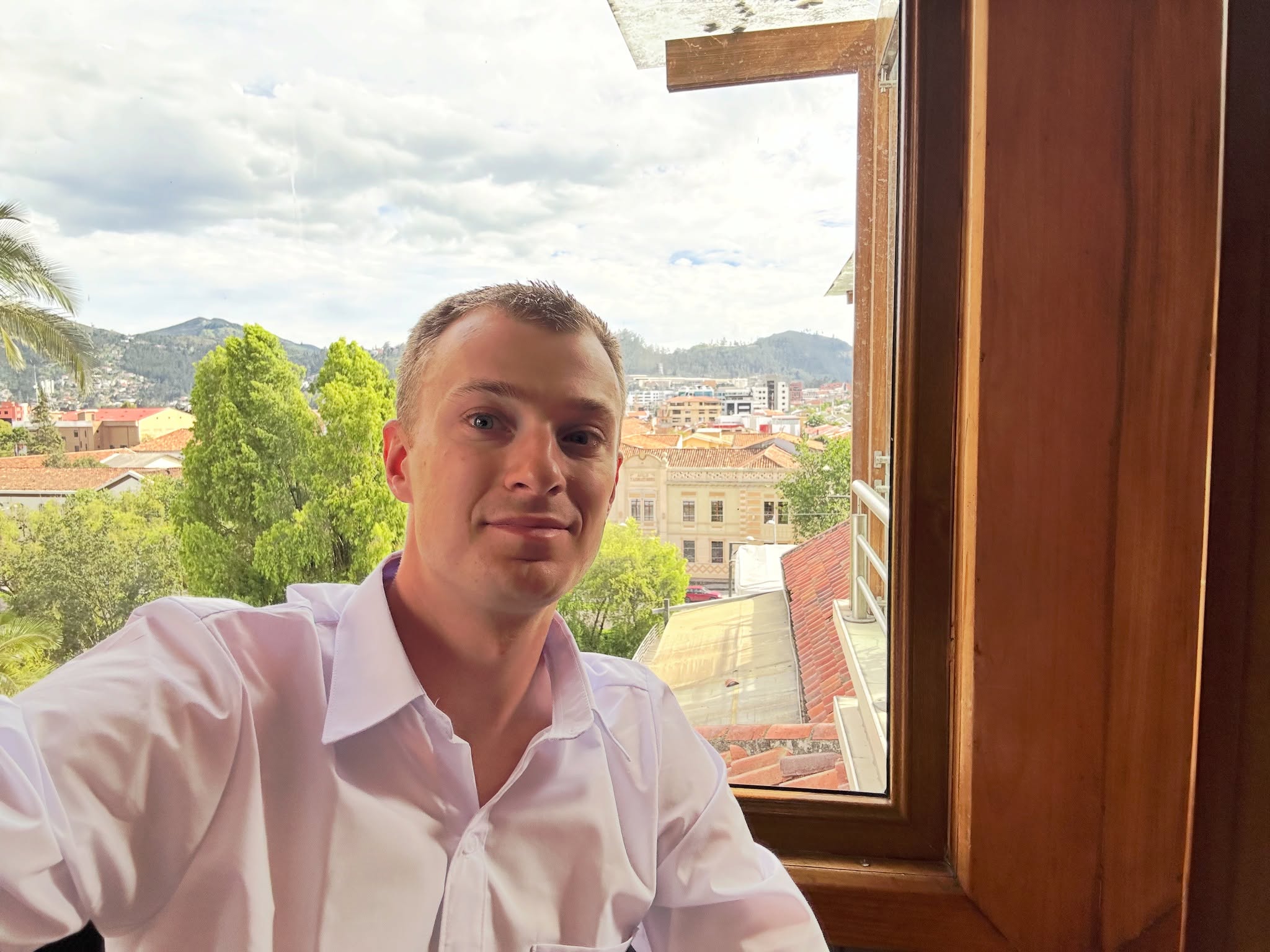
Chip Moreno — American Expat in Cuenca, Ecuador
Chip is the founder of EcuaPass (Ecuador visa services), FileAbroad (U.S. taxes for expats), EcuaInsure (health insurance), EcuadorTranslations, and CuencaExpat (daily news). He holds a B.S. in Computer Science from WGU, obtained his Ecuador Professional Visa in 2025, and is pursuing the IRS Enrolled Agent credential and an Ecuadorian insurance broker license.