Ecuador Visa Trust Income: A Lawyer's Step-by-Step Guide to Approval
Navigating Ecuadorian visa applications with trust income? This expert lawyer's guide covers requirements from the Ministerio de Relaciones Exteriores, Cédula,
Navigating Ecuadorian Visa Applications with Income from a Trust: A Lawyer's Guide
For many foreigners dreaming of a tranquil retirement or a more fulfilling life in Ecuador, the allure of its stunning landscapes, rich culture, and affordable cost of living is undeniable. Cuenca, in particular, has become a magnet for those seeking a vibrant yet peaceful community. However, the transition involves navigating the intricate world of Ecuadorian immigration law. A common point of confusion arises when an applicant's primary source of income for visa purposes is derived from a trust. As an Ecuadorian lawyer specializing in immigration law in Cuenca, I've seen firsthand how this can complicate an otherwise straightforward application. This guide will demystify the process, ensuring you can achieve your residency goals with confidence and compliance.
Ecuadorian immigration law is meticulous in its requirements for demonstrating financial solvency. The intent is to ensure that applicants can support themselves without becoming a burden on the state. When your income originates from a trust, this requires a more nuanced approach to documentation and presentation to satisfy the requirements of the Ministerio de Relaciones Exteriores y Movilidad Humana (Ministry of Foreign Affairs and Human Mobility).
Understanding the Core Requirement: Proof of Sufficient and Stable Income
The cornerstone of most Ecuadorian residency visas is the ability to prove a consistent and sufficient monthly income. This is mandated by the Ley Orgánica de Movilidad Humana (LOHM) and its corresponding Reglamento (RLOHM). For traditional applicants, this often means providing pension certificates or employment contracts. When your income is disbursed through a trust, the "source" becomes the critical element, and the trust document itself plays a pivotal role.
The authorities at the Coordinación Zonal 6 office here in Cuenca need to be convinced that the trust is a legitimate, ongoing entity that will reliably provide you with the required income. The law does not explicitly detail how to present trust income, but through practice, we know that transparency and irrefutable proof of fund availability are paramount.
Common Pitfalls for Trust-Based Visa Applicants
Expats relying on trust income often encounter several common, and entirely preventable, hurdles:
- Vague Trust Documentation: A generic or incomplete trust agreement is an immediate red flag. The document must explicitly define the trustee, the beneficiaries, the assets, the irrevocable nature (or terms) of the distributions, and the duration of the trust.
- A "Generic" Trustee Letter: Many applicants submit a simple letter from their trustee. This is a critical mistake. The letter must not only confirm your status and the monthly distribution amount but must also explicitly state the income will be transferred to you in Ecuador. This detail demonstrates a clear commitment to supporting your life within the country.
- Misunderstanding Income Thresholds: The minimum income requirement is tied to the Ecuadorian Salario Básico Unificado (SBU), which for 2024 is $460 USD. For a Visa de Residencia Temporal de Rentista, you must prove an income of at least three SBUs ($1,380 USD per month), plus an additional SBU for each dependent. For a retiree visa, the requirement is currently one SBU ($460 USD). These figures are non-negotiable.
- Expired Background Checks: A national-level criminal background check (e.g., from the FBI in the U.S.) is required. Crucially, this document is generally considered valid by the Ministry for only 180 days from its date of issuance. Many applicants miscalculate the timing of apostilling and translation, arriving at their appointment with an expired document, which results in an automatic rejection.
- Improper Translations: All foreign documents must be translated into Spanish. A common and costly error is having translations done outside of Ecuador. The Ministry will only accept translations performed within Ecuador by a sworn translator (perito traductor) officially accredited by the Consejo de la Judicatura.
Step-by-Step Guide: Preparing Your Trust-Based Visa Application
Navigating this process requires meticulous preparation. Here’s a structured approach:
Step 1: Obtain a Comprehensive and Apostilled Trust Agreement
This is your foundational document. Your trust agreement must be:
- Legally Sound: Drafted by a qualified legal professional in its jurisdiction of origin.
- Comprehensive: It must clearly detail the grantor, trustee, beneficiaries, assets, and—most importantly—the specific, unalterable terms of income distribution to you as the beneficiary.
- Apostilled: Obtain an official, notarized copy of the trust agreement and have it apostilled (or legalized at an Ecuadorian consulate if your country is not part of the Hague Convention). This authenticates the document for international use. Remember, the Apostille itself does not get translated, only the document it is attached to.
Step 2: Secure a Legally-Sufficient Letter from the Trustee
The trustee must provide a formal, notarized letter that includes:
- Confirmation of your status as a beneficiary.
- A clear statement of the exact monthly income that will be distributed to you, referencing the specific clause in the trust agreement that mandates this distribution.
- A declaration that the funds are intended to be transferred to your account in Ecuador for the duration of your residency.
- The letter must be on official letterhead, signed, notarized, and then apostilled.
Step 3: Provide Proof of the Trust's Underlying Assets
To lend credibility to the trust, it is highly advisable to include evidence of the assets that generate the income. This demonstrates the trust's financial health. This could include:
- For Investment Trusts: Recent, official statements from brokerage firms or mutual fund reports.
- For Real Estate Trusts: Property deeds and current rental income statements.
- For Business Trusts: Business registration documents and recent profit and loss statements.
The goal is to leave no doubt that the trust is a real, functioning financial instrument.
Step 4: Document Your Personal Financial History
You must show the money trail. Provide:
- Bank Statements: At least six months of personal bank statements showing the consistent deposit of funds from the trust into your account. Highlight these transactions for clarity.
Step 5: Obtain and Legalize All Supporting Documents
- Apostille/Legalization: As mentioned, all foreign official documents (birth certificate, marriage certificate, criminal background check, trust documents) require an Apostille or consular legalization.
- Certified Translation: Once you are in Ecuador, have all apostilled documents translated by a court-sanctioned translator. Do not do this abroad.
Step 6: Submit a Flawless Application
The application is submitted online through the Ecuadorian government portal and then in person. Ensure the Formulario de Solicitud de Visa is filled out perfectly. The current government application fee is $50 USD, and the subsequent visa issuance fee for temporary residency is $400 USD. Hyper-specific tip for the Cuenca office: Arrive at your appointment with all physical documents perfectly ordered, plus a USB drive containing high-quality PDF scans of every single document. Recent procedural shifts mean officials often work directly with the digital files.
Legal Checklist for Cuenca Expats Relying on Trust Income:
- [ ] Trust Agreement: Full copy, notarized and apostilled.
- [ ] Trustee Letter: Detailed, notarized, and apostilled.
- [ ] Proof of Underlying Assets: Recent financial statements to prove trust solvency.
- [ ] Personal Bank Statements: 6+ months showing consistent trust income deposits.
- [ ] Criminal Background Check: Apostilled and valid (issued within the last 180 days).
- [ ] Passport: Valid for at least six months, with color copies of the main page and Ecuadorian entry stamp.
- [ ] Visa Application Form (Formulario de Solicitud): Completed online and printed.
- [ ] Proof of Payment: For the $50 application fee.
- [ ] Passport-sized Photo: On a white background, in JPG format for the online application.
- [ ] Proof of Health Insurance: Policy must be valid in Ecuador (this can often be submitted after visa approval but before the cédula appointment).
- [ ] Certified Translations: Done in Ecuador for all non-Spanish documents.
⚠️ Legal Alert: When to Stop and Consult an Attorney.
While this guide provides a detailed overview, immigration law, especially the interpretation of financial documents by Ministry officials, is subject to change and discretion. You should immediately consult with an experienced Ecuadorian immigration attorney if:
- Your trust agreement has ambiguous language regarding distributions.
- The trustee is a private individual (not a financial institution), which invites higher scrutiny.
- You have any prior immigration issues or a criminal record, however minor.
- You have received a subsanación notice (a request for more information or to correct an error) and are unsure how to respond. A flawed response can lead to outright denial.
- The income from your trust is not a fixed amount but fluctuates based on performance.
Navigating Ecuadorian visa law with trust-based income requires precision. Errors in documentation or procedure can lead to delays costing months and hundreds of dollars, or a rejection that jeopardizes your dream of living in Ecuador.
As a lawyer based here in Cuenca, I have successfully guided numerous expats through this exact process, anticipating the specific requirements of our local immigration office. My commitment is to provide clear, actionable legal advice, ensuring your application is accurate, complete, and professionally presented.
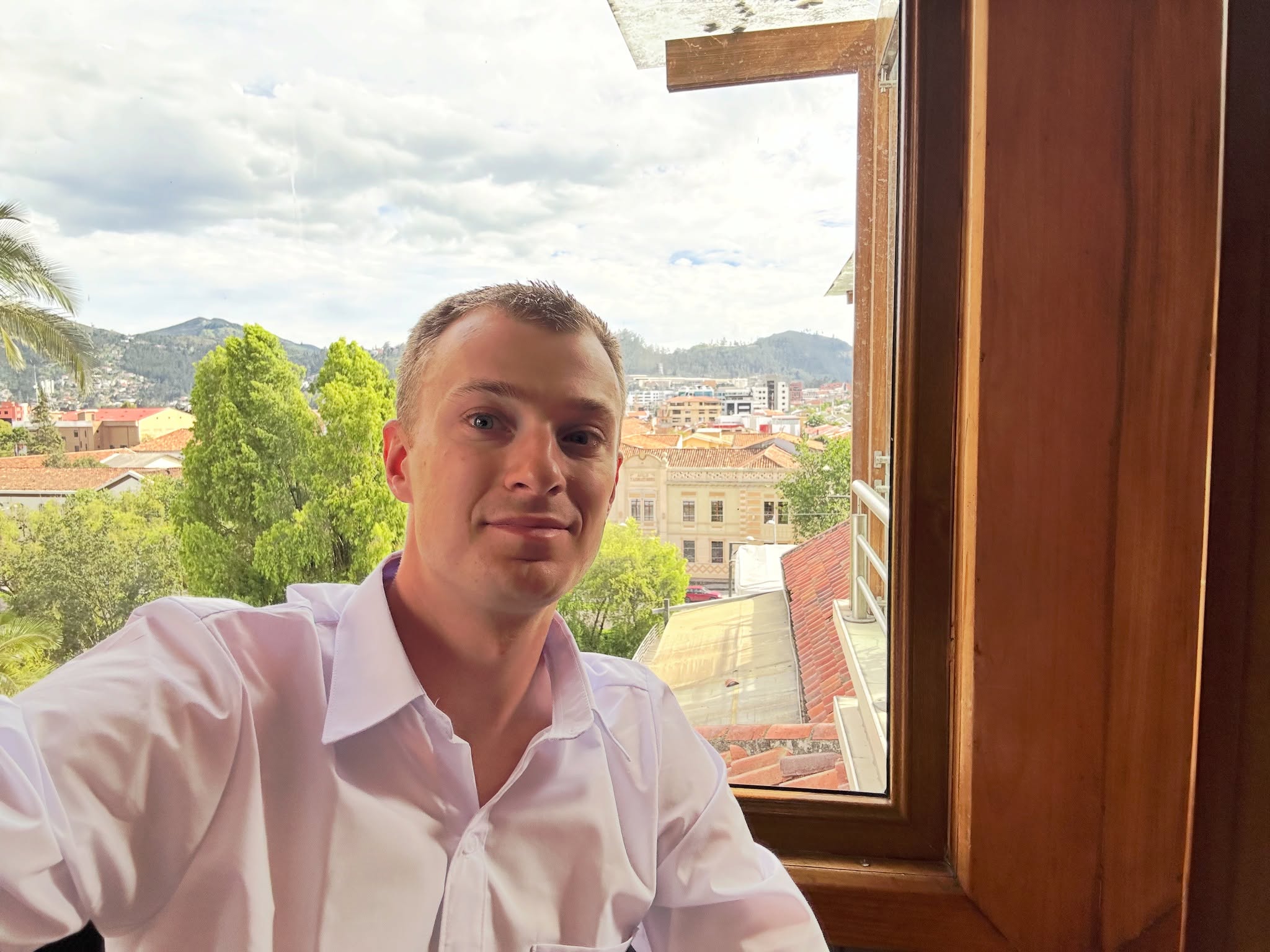
About the Author
Chip Moreno — American Expat in Cuenca, Ecuador
Chip is the founder of EcuaPass (Ecuador visa services), FileAbroad (U.S. taxes for expats), EcuaInsure (health insurance), EcuadorTranslations, and CuencaExpat (daily news). He holds a B.S. in Computer Science from WGU, obtained his Ecuador Professional Visa in 2025, and is pursuing the IRS Enrolled Agent credential and an Ecuadorian insurance broker license.