How to Get MERCOSUR Residency in Ecuador: Step-by-Step Legal Guide
Unlock Ecuador residency for MERCOSUR citizens with this expert legal guide. Learn about Ley Orgánica de Movilidad Humana, application steps, required documents
Unlocking Residency in Ecuador: An Expert's Guide to the MERCOSUR Agreement
For citizens of Argentina, Brazil, Paraguay, and Uruguay, the MERCOSUR Residency Agreement offers the most direct route to establishing a life in Ecuador. This guide demystifies the process, grounded in the current legal framework and practical, on-the-ground experience.
The Legal Foundation: More Than Just a Handshake
The "Agreement on Residency for Nationals of MERCOSUR Member States" is not merely a policy; it's a binding international treaty incorporated directly into Ecuadorian law. Its provisions are implemented through the Ley Orgánica de Movilidad Humana (LOMH) and its corresponding regulations (Reglamento). Specifically, Article 60, numeral 12 of the LOMH creates the visa category for individuals covered by international instruments, which is where MERCOSUR nationals squarely fit.
This legal foundation provides a key benefit: the primary qualification for the two-year temporary residency visa is your nationality and a clean criminal record. Unlike investor or professional visas, the financial solvency requirement is significantly less burdensome.
Key Benefits for MERCOSUR Citizens:
- Simplified Financial Proof: You are not required to demonstrate a specific monthly income like pensioners ($1,275/month) or a large investment. Instead, you must provide a sworn statement (declaración juramentada) of your commitment to have sufficient means to subsist, often supported by bank statements showing reasonable funds.
- Direct Path to Permanency: The initial temporary residency is granted for two years. Crucially, under Article 64 of the LOMH, you can apply for permanent residency after just 21 months of continuous temporary residency.
- Broad Eligibility: This visa is not tied to work, study, or retirement. It grants you the right to live and undertake any lawful activity in Ecuador.
Navigating the Application Process: A Step-by-Step Legal Strategy
The process is managed by the Ministerio de Relaciones Exteriores y Movilidad Humana (MREMH), also known as the Cancillería. Applications are filed online and then finalized at a provincial MREMH office.
Step 1: Compile Your Dossier with Precision
Mistakes in documentation are the number one cause of rejection. Each document must be flawless.
- Valid Passport: Must be valid for at least six months from the date of application. Submit a color copy of the main page.
- Apostilled National Criminal Record Certificate: This is non-negotiable. It must be issued by the federal or national authority of your country of citizenship (e.g., the Registro Nacional de Reincidencia in Argentina). It must cover the last five years and must be apostilled. The certificate is typically valid for 90-180 days, so time its acquisition carefully.
- Movimiento Migratorio: This official certificate from Ecuador's immigration authority details your legal entries and exits. It costs approximately $5.00 and can be obtained online or at an immigration office. This proves you are in the country legally at the time of application.
- Proof of Financial Means (Simplified): While no fixed amount is mandated by law, you must demonstrate you will not be a public charge. This is best accomplished with:
- A declaración juramentada (sworn statement) made before an Ecuadorian notary, stating you have the means to support yourself.
- Supporting documents like 3-6 months of recent bank statements. There's no magic number, but having a few thousand dollars shows good faith.
- Passport-sized Photograph: One digital photo with a white background, in JPG format, meeting the specific requirements of the online system.
Hyper-Specific Detail #1: The formal name for the primary application is the Formulario Único de Solicitud de Visas. This is completed online through the government's official portal before you ever set foot in the MREMH office.
Step 2: Fulfill the Mandatory Health Insurance Requirement
This is a critical, and often overlooked, step mandated by Article 53 of the LOMH. You cannot be granted residency without proof of health insurance, either public or private, that is valid in Ecuador for the duration of your visa.
Hyper-Specific Detail #2 (Common Mistake): Many applicants arrive at their MREMH appointment without proof of health insurance, assuming they can get it after their visa is approved. This is incorrect. The system will not allow the official to approve the visa without uploading proof of a valid insurance policy. You must secure this before your final appointment. Policies from Ecuadorian providers are readily available and can often be purchased online.
Step 3: Submit Your Application and Pay Fees
- Online Submission: Create a user account on the MREMH's official website, fill out the Formulario Único de Solicitud de Visas, and upload all required documents in PDF format.
- Appointment & Approval: Once the online submission is reviewed, you will be scheduled for an in-person appointment to verify your original passport. Upon final approval, you will be instructed to pay the government fees.
- Pay Government Fees: The fees are paid after the application is approved but before the visa is issued.
- Application Fee: $50
- Visa Issuance Fee: $200 These are paid via a deposit at a designated bank (e.g., BanEcuador) using a specific payment order (orden de pago) generated by the system.
Step 4: The Final Step - Obtaining Your Cédula de Identidad
Your residency is not truly complete until you hold your Ecuadorian ID card, the cédula. This is a separate process handled by the Dirección General de Registro Civil, Identificación y Cedulación.
- Get the Orden de Cedulación: Once your visa is issued and stamped into your passport (or issued electronically), the MREMH will issue an Orden de Cedulación (Order for ID Card). This is the official document authorizing the Registro Civil to issue your ID.
- Go to the Registro Civil: Take your passport with the visa, the Orden de Cedulación, and copies to the main Registro Civil office. In Cuenca, this is on the Avenida de las Américas.
- Pay the Fee and Get Your Card: The fee for a first-time cédula for foreign residents is currently $5.00. You will be photographed, fingerprinted, and issued your cédula on the same day.
Hyper-Specific Detail #3 (The Cuenca Pitfall): Do NOT go to the Registro Civil assuming your visa approval automatically appears in their system. You must have the physical or electronic Orden de Cedulación from the MREMH in hand. Showing up without it is the most common time-wasting mistake expats make, resulting in being turned away after waiting in line. The two government systems are not seamlessly integrated in real-time.
Legal Checklist for Cuenca Applicants (MERCOSUR)
- [ ] Passport valid for 6+ months.
- [ ] Apostilled national criminal record certificate (issued within last 180 days).
- [ ] Obtain Movimiento Migratorio certificate ($5 fee).
- [ ] Purchase a valid Ecuadorian health insurance policy.
- [ ] Prepare a declaración juramentada of financial means at a local notary.
- [ ] Have supporting bank statements ready.
- [ ] Fill out the online Formulario de Solicitud de Visa and upload all documents.
- [ ] Have funds ready for government fees ($50 + $200).
- [ ] Once visa is issued, secure the Orden de Cedulación before going to the Registro Civil.
⚠️ Legal Alert: When to Immediately Consult an Attorney
Do not attempt to self-file your MERCOSUR residency application if:
- You have any criminal record, anywhere. Even a minor, decades-old offense can be grounds for denial if not handled correctly. An attorney must assess the situation and frame the application properly.
- Your documents contain discrepancies. A name misspelled on a birth certificate that doesn't match your passport can halt the entire process.
- You have a prior visa overstay in Ecuador. This creates a complication that must be legally resolved before a new residency can be granted.
- You are transitioning from another visa type within Ecuador. The process has specific legal steps that, if missed, can invalidate your application.
The MERCOSUR Residency Agreement is a testament to the strong ties between our South American nations. By approaching the process with meticulous preparation and an understanding of the specific legal requirements under the LOMH, you can ensure a smooth and successful transition to your new life in Ecuador.
About the Author
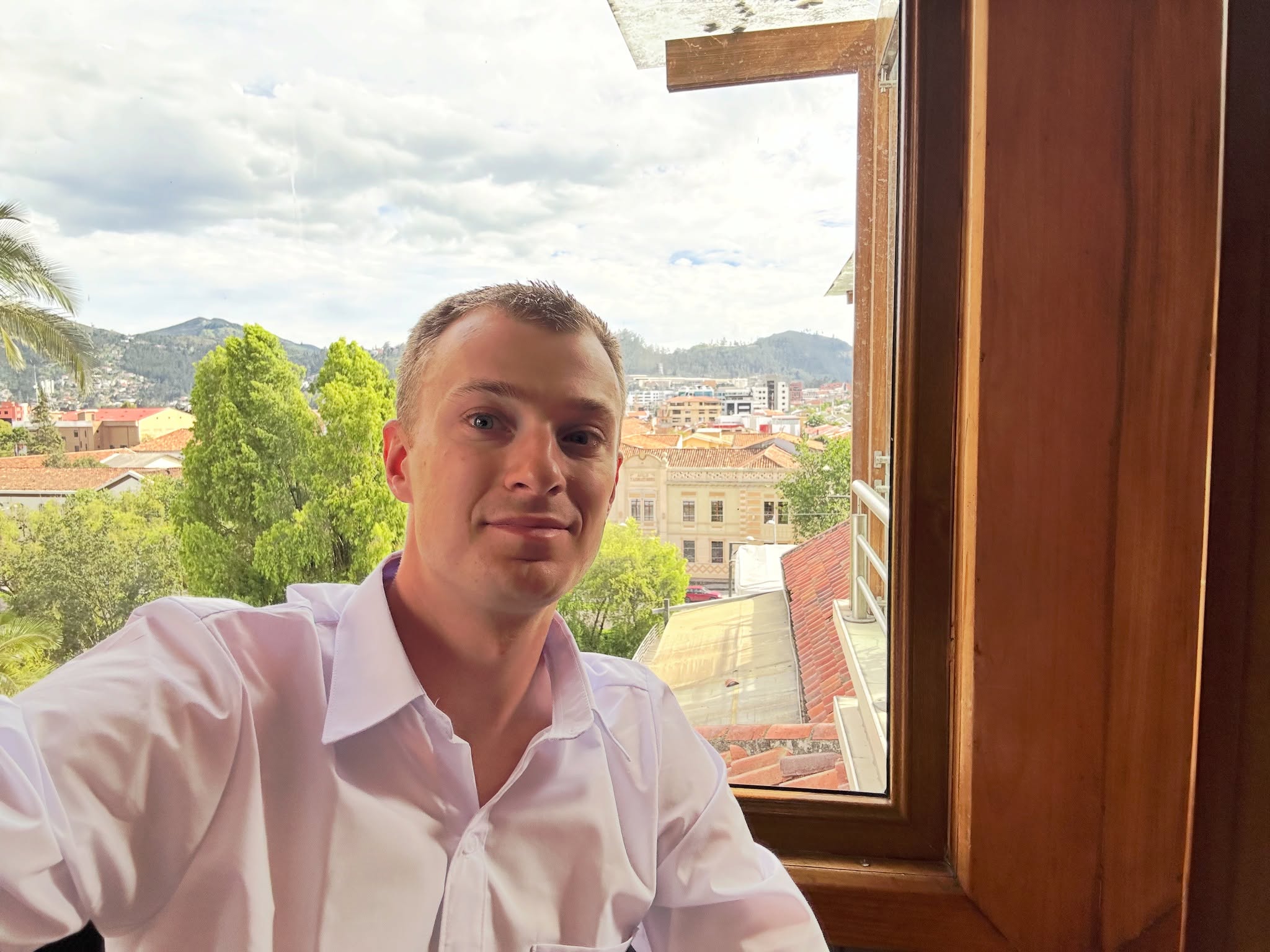
Chip Moreno — American Expat in Cuenca, Ecuador
Chip is the founder of EcuaPass (Ecuador visa services), FileAbroad (U.S. taxes for expats), EcuaInsure (health insurance), EcuadorTranslations, and CuencaExpat (daily news). He holds a B.S. in Computer Science from WGU, obtained his Ecuador Professional Visa in 2025, and is pursuing the IRS Enrolled Agent credential and an Ecuadorian insurance broker license.