Overstayed Your Ecuador Visa? How to Fix It & Avoid Deportation
Navigating Ecuador's immigration laws after overstaying your permit? Learn the legal consequences, fines (like the $920 SBU penalty), and the essential steps to
The Unseen Toll: Overstaying Your Stay in Ecuador and the Legal Path to Rectification
For many who choose to call Ecuador home, the journey begins with the allure of its landscapes, the warmth of its people, and the promise of a more affordable, fulfilling life. The initial entry, often under a 90-day automatic stay permit granted to many nationalities, is deceptively simple. However, unforeseen circumstances—a bureaucratic delay, a personal emergency, or simply miscalculating the complex rules—can lead many down a path fraught with legal peril: overstaying their authorized period of stay.
As an Ecuadorian lawyer with extensive experience guiding expatriates through the complexities of immigration law from my office here in Cuenca, I have witnessed firsthand the anxiety this situation creates. The Ecuadorian bureaucratic landscape, while structured, is unforgiving of procedural errors. This article will demystify the legal consequences of overstaying, outline the precise penalties, and provide an actionable roadmap for rectification, grounded in the current Ecuadorian legal framework.
Understanding Your Authorized Stay and Its Limitations
Most foreign visitors do not enter on a "tourist visa" but are granted an automatic 90-day permiso de permanencia upon arrival within a 12-month period, counted from their first date of entry. This initial 90-day period can be extended once for an additional 90 days by applying for a prórroga.
The Prórroga Process & Cost
The prórroga must be requested before the initial 90 days expire. This is a common and critical error. The application is made online or at a Subsecretaría de Migración office. The current fee for this extension is one-third of a Salario Básico Unificado (SBU), which for 2024 is $153.33 USD ($460 / 3). Missing this window immediately places you in an irregular status on day 91.
The legal basis for these regulations is Ecuador's Ley Orgánica de Movilidad Humana (LOMH) and its accompanying Reglamento. These documents superseded the old Ley de Migración and now govern the rights and obligations of foreign nationals.
The Legal Consequences of an Irregular Status
When a foreign national remains in Ecuador beyond their authorized stay, they enter what the LOMH defines in Artículo 56 as a "situación migratoria irregular." This is not a minor oversight; it is a formal legal violation with escalating consequences.
Fines and Sanctions
The most immediate consequence is a financial penalty. An overstay constitutes a falta migratoria (migratory fault).
The Exact Fine Amount
According to the LOMH, the fine for overstaying is two Salarios Básicos Unificados (SBU). With the 2024 SBU set at $460 USD, the current fine is a non-negotiable $920 USD. This fine is not calculated per day; it is a flat penalty assessed once the overstay is discovered.
Beyond the substantial fine, more severe sanctions apply:
- Deportation: While not automatic, authorities can initiate deportation proceedings for individuals in an irregular status, especially in cases of prolonged overstays or other aggravating circumstances.
- Entry Bans: A deportation order carries an automatic ban from re-entering Ecuador for a period determined by the authorities, often several years. Even voluntarily addressing an overstay can flag your profile for future scrutiny.
- Ineligibility for Future Visas: This is the most common and frustrating consequence. An overstay record can render you ineligible for any temporary or permanent residency visa until the irregularity is formally resolved through the prescribed legal process.
The Vicious Cycle: How an Overstay Prevents Residency
Many expats mistakenly believe they can remain in the country while preparing their residency application, letting their 90-day permit lapse. This is a critical error. The Ministerio de Relaciones Exteriores y Movilidad Humana requires applicants for nearly all residency visas to be in a regular migratory status at the time of application. By overstaying, you disqualify yourself from the very solution you are seeking, trapping you in a legal limbo.
The Cuenca Office Confusion
A classic mistake I see in Cuenca is expats going to the wrong government office. The Registro Civil is where you obtain your cédula (national ID card) after your residency visa has been approved and issued. It has no authority to handle visa applications or overstay issues. All immigration and visa matters in this region are handled at the Coordinación Zonal 6 del Ministerio de Relaciones Exteriores y Movilidad Humana, located on Avenida Ordóñez Lasso. Showing up at the wrong office wastes precious time and can lead to missing critical deadlines.
The Path to Rectification: Steps to Regularize Your Situation
While serious, an overstay can often be rectified. However, attempting to simply leave the country without addressing it is a gamble that can lead to being stopped at the airport, detained, and forced to resolve the issue under duress.
Step 1: Assess Your Status and Gather Documentation
First, confirm the exact duration of your overstay. You will need a Certificado de Movimiento Migratorio.
The Essential Certificate
This official document, issued by the Ministerio del Interior, lists all your entries and exits from Ecuador. It is the definitive record immigration authorities will use. It costs approximately $5-10 USD and is mandatory for resolving an overstay, as it provides the legal basis for calculating the fine. Your passport stamps alone may not be considered sufficient.
Step 2: Engage an Experienced Immigration Attorney (Non-Negotiable)
The Ecuadorian immigration system is not designed for self-navigation, especially when you are in a state of non-compliance. An experienced attorney will:
- Accurately interpret your Movimiento Migratorio certificate.
- File the necessary paperwork to formally acknowledge the falta migratoria.
- Generate the official payment order for the $920 fine.
- Advise on the only two viable paths forward after payment: leaving the country legally or, in very specific and limited cases, applying for a visa.
Step 3: Formalizing the Rectification Process
The process, guided by your attorney, involves:
- Petitioning the Immigration Authority: Submitting a formal request at the appropriate Coordinación Zonal to address the irregular status.
- Payment of the Fine: The fine is paid at a designated bank, not to the immigration office directly. You must retain the official deposit receipt.
- Resolution and Exit Order: Upon presenting proof of payment, the immigration authority will issue a resolution.
The Post-Fine Reality
Paying the $920 fine does not grant you a new 90-day stay. This is a pervasive and dangerous myth. The payment merely settles the penalty. After payment, you are typically granted a short period, often 30 days, to leave Ecuador voluntarily. This ensures you exit in a regularized status, preventing an entry ban. Attempting to stay beyond this period will place you back into an irregular status, compounding the problem.
Step 4: Pursuing Residency the Correct Way
If your goal is to reside in Ecuador, the proper strategy is to regularize your status by leaving the country and then applying for the appropriate residency visa from an Ecuadorian consulate abroad. The old visa categories (9-I, 9-J, etc.) are obsolete. The LOMH established new categories, such as:
- Visa de Residencia Temporal de Jubilado (Retiree)
- Visa de Residencia Temporal de Inversionista (Investor)
- Visa de Residencia Temporal de Rentista (For individuals with stable income)
- Visa de Residencia Temporal de Profesional (For degreed professionals)
Each has specific requirements that must be met before you can legally enter Ecuador to live long-term.
⚠️ Legal Alert: When to Stop and Consult an Attorney Immediately
You MUST consult with an Ecuadorian immigration attorney without delay if:
- You have already overstayed your 90-day permit, even by one day. Do not attempt to leave the country or visit an immigration office without legal counsel.
- Your 90-day permit is about to expire, and you have not yet applied for the prórroga.
- You have received any official notification (notificación) from an Ecuadorian immigration authority.
- You wish to apply for residency but are within 30 days of your authorized stay expiring.
- You have a prior overstay record and wish to return to Ecuador.
The cost of a legal consultation is a minor investment compared to the $920 fine, potential deportation, and a multi-year ban from the country you wish to call home.
Conclusion: Proactive Compliance is Your Only Defense
Overstaying your authorized stay in Ecuador is a serious legal violation with significant financial and logistical consequences. The LOMH and its regulations are strictly enforced. The most effective strategy is proactive compliance: meticulously tracking your days, understanding the extension process, and engaging legal counsel before a problem arises. My practice in Cuenca is dedicated to helping expats navigate these exact challenges, ensuring that a procedural misstep does not derail their dream of living in this beautiful country.
Is your legal status in Ecuador secure? Don't let uncertainty become a crisis. Schedule a consultation to assess your situation and ensure a compliant path forward.
About the Author
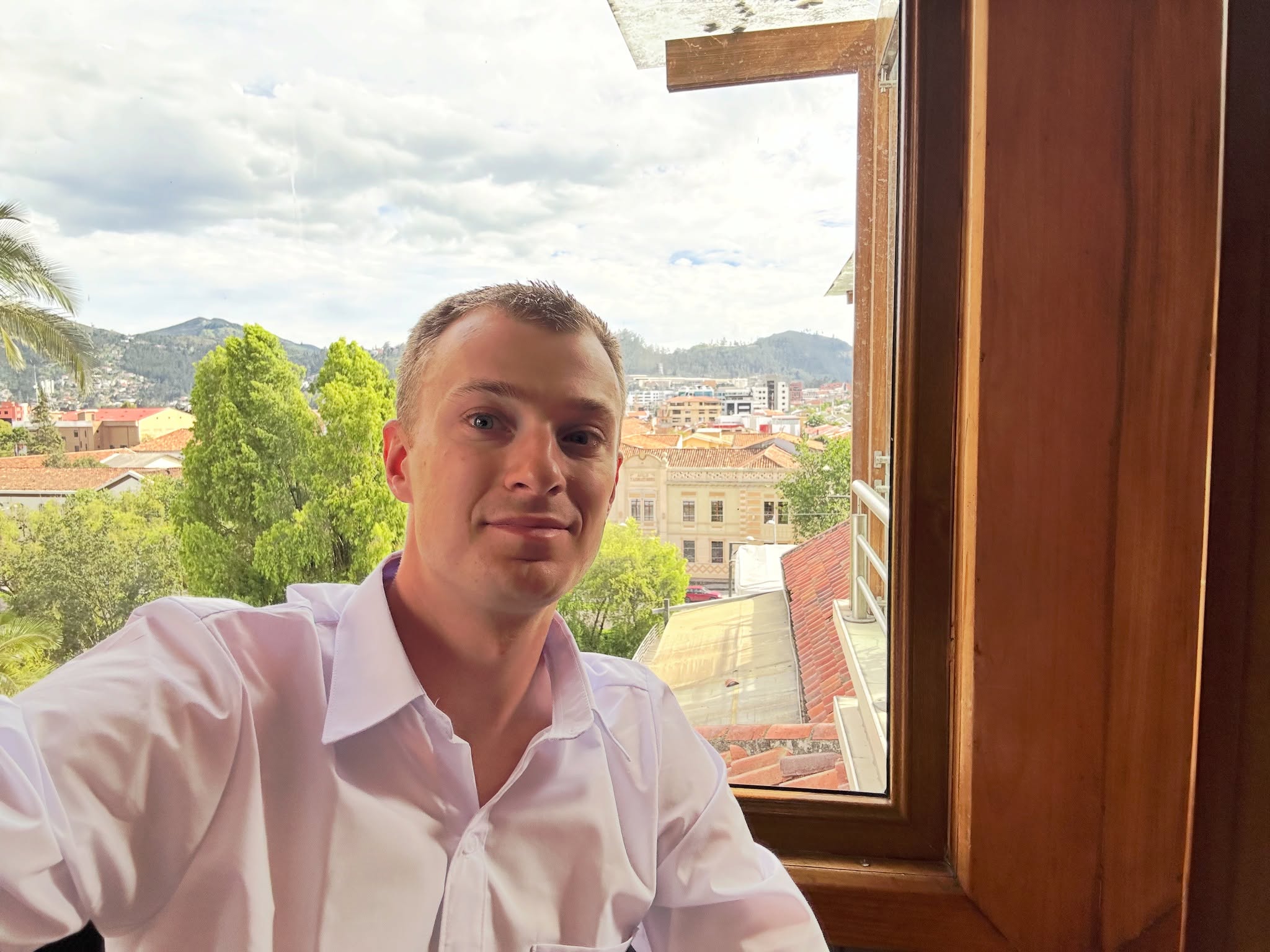
Chip Moreno — American Expat in Cuenca, Ecuador
Chip is the founder of EcuaPass (Ecuador visa services), FileAbroad (U.S. taxes for expats), EcuaInsure (health insurance), EcuadorTranslations, and CuencaExpat (daily news). He holds a B.S. in Computer Science from WGU, obtained his Ecuador Professional Visa in 2025, and is pursuing the IRS Enrolled Agent credential and an Ecuadorian insurance broker license.