What Happens to Your Ecuadorian Investor Residency If Your Bank Fails? A Step-by-Step Guide
Discover how to safeguard your Ecuadorian investor residency if your bank fails. Learn about COSEDE insurance gaps, MREMH notification, and reconstituting your
The Unforeseen Collapse: Safeguarding Your Ecuadorian Investor Residency If Your Bank Fails
Navigating Ecuador's residency system as an investor offers a pathway to a new life, but it comes with unique vulnerabilities. The cornerstone of the Temporary Resident Investor Visa (Residencia Temporal de Inversionista), formerly known as the 9-I visa, is a significant investment, often held as a Certificate of Deposit (Certificado de Depósito a Plazo Fijo) in an Ecuadorian bank.
This article addresses a critical, worst-case scenario: what happens to your residency if the bank holding your investment fails? As an editor specializing in Ecuadorian law, I will provide a precise, actionable guide based on legal frameworks and on-the-ground experience to protect your status.
The Investor Visa and the CD Requirement: A Legal Foundation
The Investor Visa is governed by the Ley Orgánica de Movilidad Humana (LOMH) and its regulations. The law requires an investment sufficient to generate the means for the applicant's subsistence. The specific amount is defined in Artículo 56 of the Reglamento a la Ley Orgánica de Movilidad Humana, which mandates an investment no less than one hundred times the unified basic salary (Salario Básico Unificado - SBU). For 2024, with an SBU of $460, this means a minimum investment of $46,000.
This investment, typically in the form of a CD, serves as proof to the Ministerio de Relaciones Exteriores y Movilidad Humana (MREMH) that your capital is active within the Ecuadorian economy. The CD's term must align with your residency period, usually two years. The stability of this investment is fundamental to maintaining your legal status.
When the Unthinkable Happens: Bank Intervention and Your Residency
While Ecuador's financial system is regulated by the Superintendencia de Bancos del Ecuador (SB), no institution is entirely immune to failure. Should your bank face intervention or liquidation, your immediate concern becomes the potential jeopardy to your residency.
The LOMH and its regulations do not provide an explicit step-by-step remedy for this specific scenario. The law focuses on the initial demonstration of the investment. Therefore, the burden falls on you to proactively prove to the MREMH that, despite the bank's failure, you continue to meet the underlying requirements of the law. Your initial compliance was valid; the challenge is demonstrating continued compliance through the crisis.
Hyper-Specific Detail #1: The COSEDE Insurance Gap
A critical detail most investors overlook is the coverage limit of Ecuador's deposit insurance, managed by the Corporación del Seguro de Depósitos (COSEDE). As of 2024, COSEDE insures deposits up to $32,000 per person, per financial institution. With the minimum investor visa requirement at $46,000, at least $14,000 of your mandatory investment is uninsured. This gap is a significant financial risk and a potential point of failure for your residency if the bank collapses. You must have a plan to cover this shortfall immediately.
Step-by-Step Action Plan: Protecting Your Legal Status
If your bank is under intervention, swift, documented action is non-negotiable.
Step 1: Secure Official Documentation from Regulatory Authorities
Your first priority is to gather official evidence.
- Bank Communication: Obtain any official statements from the bank's appointed administrator (liquidador) regarding the status of your CD.
- Superintendencia de Bancos (SB): Secure the official resolution (Resolución No. SB-XXXX-XXXX) that declares the bank's intervention or liquidation. These are public records and are indispensable proof of the event's legitimacy.
- COSEDE: Immediately begin the claim process with COSEDE. Obtain an official certificate or letter confirming you are a registered depositor and outlining the timeline for the payout of the insured portion of your funds. This document proves you are actively mitigating the situation.
Hyper-Specific Detail #2: The MREMH Notification Process
Do not wait for your residency renewal to address this. You must formally notify the MREMH. This is not an informal email. You must submit a formal written request (petición) addressed to the Zonal Coordination office of the MREMH where your file is held. This petition should detail the situation, attach copies of the SB resolution and your COSEDE claim, and formally request a reasonable grace period (plazo de subsanación) to reconstitute your investment. Failing to do this proactively can be interpreted as negligence.
Step 2: Reconstitute Your Investment Immediately
Your residency is contingent on a qualifying investment.
- Secure a New CD: The moment COSEDE releases your insured funds, you must combine them with your own separate capital to meet the full $46,000 (or higher) requirement. Immediately open a new CD at a different, highly reputable bank.
- Proof is Paramount: Obtain the new Certificado de Depósito a Plazo Fijo. Ensure it is notarized if required for your specific renewal process. The MREMH will not accept promises or pending transactions; they require the finalized new investment certificate.
Step 3: Update Your File with the MREMH
Once you have the new CD, submit a second formal communication to the MREMH.
- Provide Updated Proof: Attach a notarized color copy of the new CD and a letter explaining that you have successfully complied with the investment requirement following the failure of the previous institution.
- Request Confirmation: Ask the MREMH to officially acknowledge receipt and update your immigration file (expediente).
Hyper-Specific Detail #3: Common Mistake at the Registro Civil
When you eventually renew your residency and go to the Registro Civil for your new cédula, a common pitfall is assuming your file is automatically updated. You must bring your own copies of the MREMH approval of your reconstituted investment. Government systems are not always perfectly synchronized. In Cuenca, for example, arriving without your complete paper trail, including the new CD and MREMH communications, can lead to being turned away, forcing you to reschedule your cédula appointment, which can take weeks.
⚠️ Legal Alert: When to Immediately Consult an Attorney
You must stop and seek qualified legal counsel if:
- You receive any official notification of bank intervention. Do not attempt to interpret SB resolutions on your own.
- The MREMH issues a notice (notificación) questioning your residency status or initiating a cancellation process.
- You are unable to immediately cover the uninsured portion of your investment to open a new CD.
- The bank's liquidation process is complex, involving assets beyond the simple CD, which could complicate your ability to prove your net investment.
Hyper-Specific Detail #4: The Real Cost of a New Application
If your situation is mishandled and you are forced to re-apply for residency, the costs are not trivial. A new temporary residency application involves a $50 application fee plus a $400 visa issuance fee (orden de cedulación). This does not include legal fees, notary costs, or other document expenses. Proactive legal management is far more cost-effective than a reactive re-application.
A bank failure is a severe test for an investor resident. However, the Ecuadorian legal system allows for remedies if you are proactive, meticulous with documentation, and transparent with the authorities. By understanding the specific requirements and potential pitfalls, you can navigate this crisis and secure the residency you have worked hard to obtain.
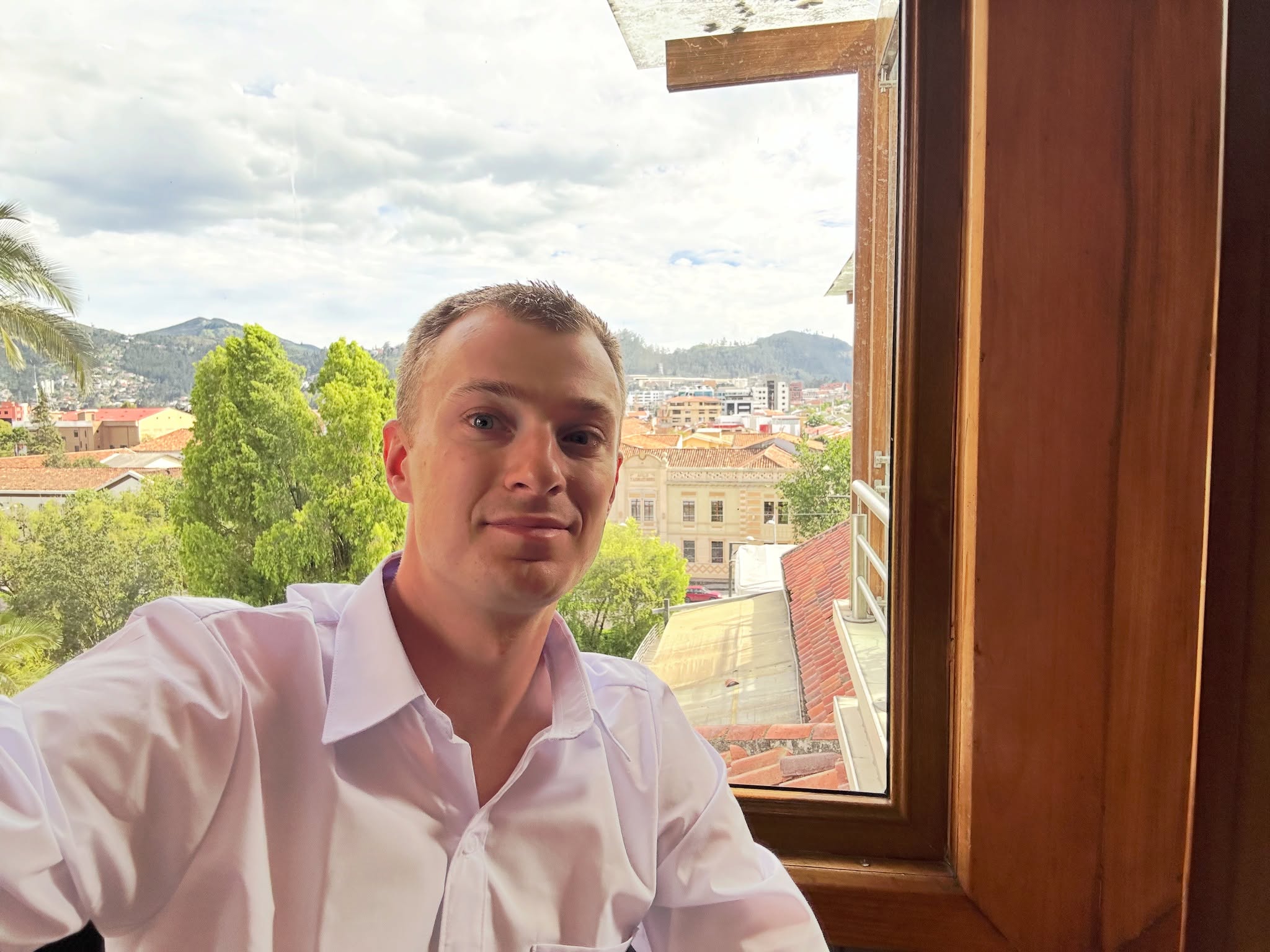
About the Author
Chip Moreno — American Expat in Cuenca, Ecuador
Chip is the founder of EcuaPass (Ecuador visa services), FileAbroad (U.S. taxes for expats), EcuaInsure (health insurance), EcuadorTranslations, and CuencaExpat (daily news). He holds a B.S. in Computer Science from WGU, obtained his Ecuador Professional Visa in 2025, and is pursuing the IRS Enrolled Agent credential and an Ecuadorian insurance broker license.