Expat Guide: Navigating Cuenca's End-of-Life Paperwork & Inheritance Laws
Expatriates in Cuenca, Ecuador: Secure your legacy. Understand forced heirship, mandatory Ecuadorian wills (Testamento Abierto), Powers of Attorney (Poder Notar
End-of-Life Paperwork: Essential Preparations for Expats in Cuenca, Ecuador
Navigating the legal landscape of a foreign country is challenging, particularly when dealing with end-of-life matters. As a legal advisor with hands-on experience in Cuenca's notarial and judicial systems, I have seen firsthand the peace of mind that comes with proper preparation and the legal chaos that results from a lack of it. This guide provides precise, actionable information to help expatriates in Cuenca secure their legacy and protect their loved ones.
Proactive planning in Ecuador is not merely a suggestion; it is a legal necessity. The Ecuadorian system is formalistic, and failing to adhere to its procedures can lead to significant delays, family disputes, and financial burdens during an already difficult time.
Understanding Ecuadorian Inheritance Law: Forced Heirship
Ecuadorian law, governed by Book III of the Código Civil (Civil Code), dictates the terms of succession. The cornerstone of this system is the concept of "asignaciones forzosas" (forced assignments), which includes the "legítima rigorosa" (forced heirship).
As defined in Article 1204 of the Civil Code, this principle legally reserves a portion of your estate for your mandatory heirs (legitimarios), who are, in order of precedence: your children, and in their absence, your parents. You cannot disinherit them except under very specific and difficult-to-prove circumstances (e.g., attempted murder of the testator).
Specifically, your estate is divided into two halves:
- La Mitad Legitimaria: 50% of your estate is reserved exclusively for your mandatory heirs.
- La Mitad de Libre Disposición: The remaining 50% is yours to bequeath freely through a will to any person or entity you choose.
If you have no mandatory heirs, you are free to dispose of 100% of your estate as you wish. Understanding this mandatory division is the first and most critical step for any expat with assets in Ecuador.
The Ecuadorian Will (Testamento): Your Essential Directive
The cornerstone of your estate plan is an Ecuadorian Will (Testamento). Relying on a will from your home country for your Ecuadorian assets is a common and costly mistake. For a foreign will to be recognized, it must undergo a court process called "exequatur," a lengthy and expensive judicial proceeding to validate a foreign judgment or document. Executing a local will is vastly more efficient and secure.
-
Open Will (Testamento Abierto): This is the most secure and recommended type. You declare your wishes before a Notario Público (Notary Public) and, typically, three witnesses, as stipulated by Article 1052 of the Civil Code. The Notary drafts the will in Spanish, which is then read aloud, signed by you, the witnesses, and the Notary. It is then entered into the public record.
- Hyper-Specific Detail: A common error at Cuenca notary offices is bringing witnesses who are related to you or named as beneficiaries in the will. Ecuadorian law prohibits this. Witnesses must be unrelated, non-beneficiaries, and residents of Ecuador.
- Approximate Cost: The notary fees for executing a Testamento Abierto typically range from $150 to $300, depending on the complexity and length.
-
Closed Will (Testamento Cerrado): You present your will, already written and in a sealed envelope, to a Notary and five witnesses. The Notary records the presentation on the envelope, but the contents remain secret until your death. This type is rare and generally not recommended due to potential formal defects that would only be discovered after your passing.
Why an Ecuadorian Will is Non-Negotiable:
- Avoids Intestacy: Without a will (sucesión intestada), the law dictates the distribution of all your assets according to a rigid formula, which may not align with your wishes.
- Asset Protection: It provides a clear legal instrument for the transfer of property, bank accounts, and vehicles located in Ecuador.
- Appointing an Executor (Albacea): You can appoint a trusted individual to manage your estate and ensure your instructions are carried out precisely.
Power of Attorney (Poder Notarial): Planning for Incapacity
A Power of Attorney (Poder Notarial) is a critical tool that allows a trusted person (apoderado) to act on your behalf. This is vital not just for end-of-life planning but for managing your affairs if you become incapacitated or are outside of Ecuador.
- Poder General (General Power of Attorney): Grants broad authority. It is powerful but should be given with extreme caution.
- Poder Especial (Special Power of Attorney): Grants specific, limited powers, such as selling a particular property, managing a specific bank account, or making healthcare decisions. This is often the safer and more practical option.
- Hyper-Specific Detail: A Poder Especial for healthcare decisions should explicitly grant the authority to access medical records and make decisions regarding life-sustaining treatment, often referred to as a "directiva anticipada."
- Approximate Cost: A Poder Especial typically costs around $40-$50 at a notary, while a Poder General is often in the $60-$80 range.
Crucial Note for POAs from Abroad: A Power of Attorney executed outside Ecuador is invalid locally unless it bears an Apostille (per the Hague Convention) and is officially translated into Spanish by a certified translator in Ecuador.
Post-Mortem Procedures: From Registration to Inheritance
When a person passes away in Cuenca, a strict series of legal steps must be followed.
- Medical Death Certificate: A physician issues a medical certificate stating the cause of death. This is done on a specific government form called the "Formulario de Defunción General," which is provided by the INEC (Instituto Nacional de Estadística y Censos).
- Death Registration (Inscripción de Defunción): The death must be registered at the Registro Civil within 48 hours. The funeral home usually handles this, using the INEC form to obtain the official Partida de Defunción (Death Certificate). This official certificate is the master key for all subsequent legal actions.
- Initiating the Inheritance Process (Posesión Efectiva): Heirs cannot simply take possession of assets. They must obtain a "Posesión Efectiva," which is the legal recognition of their status as heirs.
- Hyper-Specific Detail: For uncontested estates where all heirs are in agreement, this process no longer requires a lengthy court battle. It can be completed efficiently and cost-effectively at a Notary's office. The notary will issue a public deed (escritura pública) granting the heirs possession, which is then registered with the corresponding authorities (e.g., Property Registry for real estate). This is a critical efficiency that many are unaware of.
Legal Checklist for Cuenca Expats
- [ ] Consult an Ecuadorian Attorney: Do not rely on advice from non-professionals. Discuss your asset structure and family situation to create a compliant plan.
- [ ] Execute an Ecuadorian Will (Testamento Abierto): Ensure it is notarized with the correct number of valid witnesses and properly registered.
- [ ] Execute a Poder Especial for Healthcare: Designate someone you trust to make medical decisions if you cannot.
- [ ] Organize Your Documents: Create a file with originals or certified copies of your passport, Cedula, property deeds (escrituras), vehicle registrations (matrículas), bank account details, and your will. Inform your executor of its location.
- [ ] Clarify Beneficiaries: Beyond your will, ensure beneficiary designations on life insurance or other accounts are up to date.
- [ ] Understand the Posesión Efectiva: Inform your heirs that this notarial or judicial step will be necessary to legally access their inheritance.
- [ ] Review and Update: Life changes. Review your will and powers of attorney every 3-5 years or after major events like a marriage, divorce, or significant asset acquisition.
⚠️ Red Flags: When to Seek Immediate Legal Counsel
Stop and consult an attorney immediately if:
- You have assets in both Ecuador and another country.
- You have a blended family or children from multiple relationships.
- You wish to leave specific instructions that go beyond simple asset distribution.
- You are considering leaving assets to a non-relative, which involves the "libre disposición" portion of your estate.
- A loved one has passed away, and you need to navigate the Posesión Efectiva process.
Taking these steps is an act of responsibility and care for those you will eventually leave behind. It ensures your legacy is handled with dignity, clarity, and full compliance with Ecuadorian law.
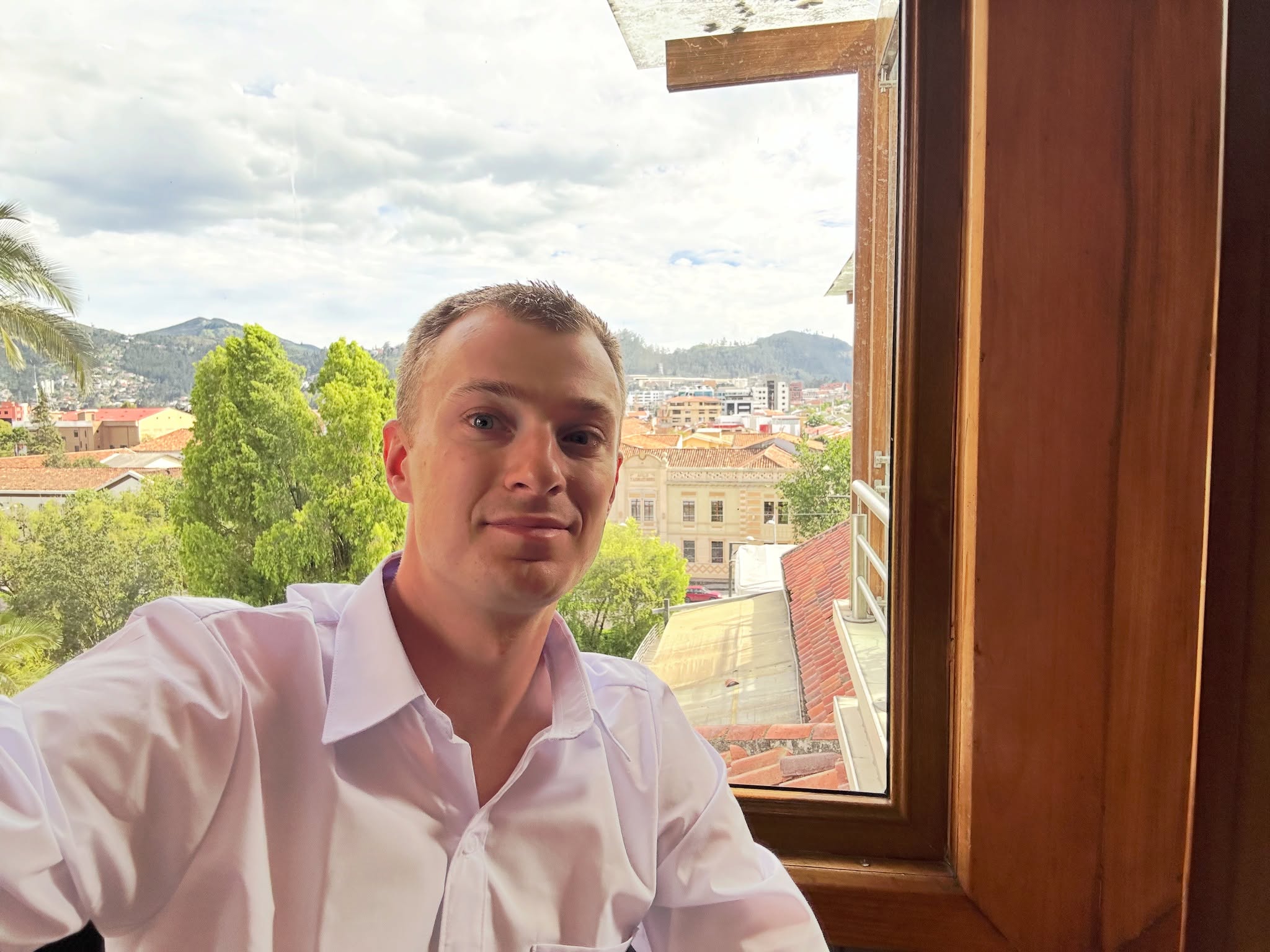
About the Author
Chip Moreno — American Expat in Cuenca, Ecuador
Chip is the founder of EcuaPass (Ecuador visa services), FileAbroad (U.S. taxes for expats), EcuaInsure (health insurance), EcuadorTranslations, and CuencaExpat (daily news). He holds a B.S. in Computer Science from WGU, obtained his Ecuador Professional Visa in 2025, and is pursuing the IRS Enrolled Agent credential and an Ecuadorian insurance broker license.