How to Create a Healthcare Power of Attorney in Ecuador: A Guide for Expats
Secure your healthcare autonomy in Ecuador. Learn how to draft and notarize a 'Poder Especial de Salud' or 'Declaración de Voluntad Anticipada' with this expert
Ensuring Your Wishes Are Heard: Healthcare Directives and Powers of Attorney in Ecuador
Navigating legal matters in a foreign country can be daunting, especially concerning something as critical as your healthcare. For expatriates in Ecuador, understanding how to legally document your medical wishes is paramount. While a general Power of Attorney (POA) is a known tool, Ecuadorian law provides for a more specific and robust instrument to ensure your healthcare decisions are respected if you cannot communicate them yourself.
As a legal professional with extensive experience advising the expatriate community in Ecuador, I have seen the peace of mind that comes from proper legal preparation. My goal is to clarify the legal framework, outline the precise steps, and highlight common pitfalls, providing you with an authoritative guide to securing your healthcare autonomy.
The Legal Basis: Código Civil and the Ley Orgánica de Salud
In Ecuador, the authority for one person to act on behalf of another is established in the Código Civil (Civil Code), specifically starting around Artículo 2020, which governs the "mandato" (mandate or power of attorney). This allows an individual (the poderdante or grantor) to grant authority to another (the apoderado or agent) to act on their behalf.
However, for healthcare decisions, the Ley Orgánica de Salud (Organic Law of Health) provides a more modern and specific framework. This law introduces the concept of "Declaraciones de Voluntad Anticipada" (Advance Will Declarations). This is the most precise legal instrument for end-of-life and critical care decisions, functioning as a living will and healthcare proxy combined.
For practical purposes, many attorneys still draft a Poder Especial de Salud (Special Power of Attorney for Health), which is a meticulously crafted document based on the Civil Code but tailored exclusively for medical matters. Often, the best practice is to combine the elements of both, creating a comprehensive document that is undeniably valid and enforceable.
Key Legal Requirements for a Valid Directive:
- Legal Capacity: The person granting the authority (poderdante) must be over 18 and of sound mind (en pleno uso de sus facultades mentales) at the time of signing.
- Specificity is Paramount: Vague language is the enemy of an effective directive. The document must explicitly state the powers being granted. A generic "Power of Attorney" is insufficient for complex medical decisions and may be rejected by a hospital's legal department.
- Mandatory Notarization: For any Power of Attorney or Advance Will Declaration to be legally valid in Ecuador, it must be executed as a public deed (escritura pública) before an Ecuadorian Notario Público (Notary Public). This is a non-negotiable legal formality. The Notary verifies identity, confirms the grantor's free will and understanding, and registers the document in the public record.
- Language: The official document registered with the notary must be in Spanish. While you may have a certified English translation for your own reference, the legally binding version is the Spanish one that healthcare providers will rely on.
Defining the Scope: What Decisions Can Your Directive Cover?
A well-drafted Poder Especial de Salud or Declaración de Voluntad Anticipada empowers your designated agent to:
- Consent to or refuse medical treatments, including surgeries, medications, and therapies.
- Choose or discharge healthcare providers and facilities.
- Access all medical records and information (historia clínica).
- Make explicit decisions regarding life-sustaining treatment, such as mechanical ventilation, artificial nutrition, and resuscitation (DNR orders).
- Carry out your stated wishes regarding organ donation, as permitted under Ecuadorian law.
- Direct end-of-life care, including the administration of palliative medicine to alleviate suffering.
- Make arrangements for your remains after death (burial or cremation), which can prevent significant delays and distress for your family.
The Step-by-Step Process for Establishing Your Healthcare Directive
-
Consult an Ecuadorian Attorney: This is not a "do-it-yourself" document. An attorney ensures the language is legally precise, compliant with both the Civil Code and the Health Law, and accurately reflects your specific wishes, leaving no room for ambiguity.
-
Choose Your Agent (Apoderado): Select one or two trusted individuals (a primary and a successor). Discuss your wishes with them in detail to ensure they understand and are willing to carry out your directives, even under emotional duress.
-
Drafting the Document: Your attorney will draft the Poder Especial de Salud or Declaración de Voluntad Anticipada in Spanish. This will clearly identify you, your agent(s), and the specific powers you are granting or the specific treatments you wish to refuse.
-
Execution at the Notary (Notaría):
- You and your attorney will attend a pre-scheduled appointment at a Notaría.
- You must present your original, valid identification (Ecuadorian cédula for residents, passport for non-residents).
- Expert Tip: The Notary is legally required to read the entire document aloud to you before you sign. This is to ensure you fully comprehend its contents. Do not be surprised by this formal procedure.
- You will sign the document. In many Notarías, especially in Cuenca, you will also be required to place your thumbprint (huella digital) next to your signature on the official record.
- The Notary affixes their signature and seal, converting the document into an escritura pública.
- Hyper-Specific Detail: The cost for notarizing a Poder Especial is regulated by the state but can vary slightly. Expect to pay between $60 and $100 USD, depending on the document's length and the specific notary's administrative fees.
-
Distribution and Storage: You will receive a certified copy (copia certificada) from the notary. Provide copies to your agent, your successor agent, and your primary physician in Ecuador. Keep the original in a secure but accessible location.
Critical Expat Pitfalls to Avoid
- Relying on a Foreign POA: A Power of Attorney or Living Will from the U.S., Canada, or Europe is not automatically valid in Ecuador. It must be fully apostilled, officially translated, and protocolized by an Ecuadorian notary—a process far more expensive and time-consuming than creating a proper Ecuadorian document from the start.
- The "Friend Notarization" Fallacy: A simple signature witnessed by a U.S. Consular official or a friend is insufficient. The document must be processed through the formal Ecuadorian Notario Público system to have legal force within the country.
- Failing to Formally Revoke: If you need to change your agent or your wishes, you cannot simply tear up the old document. Revoking a Poder Especial requires executing a new escritura pública of revocation at a Notaría and formally notifying the previous agent.
- Appointing a Non-Resident Agent: While legally possible, appointing an agent who does not live in Ecuador can be practically useless in an emergency. Choose someone who is physically present in the country and can act quickly on your behalf.
Legal Checklist for Your Healthcare Directive
- [ ] I have identified a primary and a successor agent who reside in Ecuador.
- [ ] I have discussed my specific healthcare wishes with my chosen agents.
- [ ] I have retained an experienced Ecuadorian attorney to draft my directive.
- [ ] The document is a specific Poder Especial de Salud or Declaración de Voluntad Anticipada, not a general POA.
- [ ] I have scheduled an appointment at a Notaría Pública.
- [ ] I have my original cédula or passport ready for the appointment.
- [ ] I have obtained the final, notarized escritura pública.
- [ ] I have provided certified copies to my agent(s) and my doctor.
- [ ] My close family members are aware of who holds my healthcare authority.
⚠️ Legal Alert: When to Stop and Consult an Attorney
You must consult with an attorney immediately if:
- A hospital or clinic is questioning the validity of your existing directive.
- You have complex family dynamics that could lead to disputes over your care.
- Your chosen agent is hesitant or expresses confusion about their role.
- You wish to articulate highly specific or unusual medical directives.
- You have an existing foreign POA and need to understand its enforceability (or lack thereof) in Ecuador.
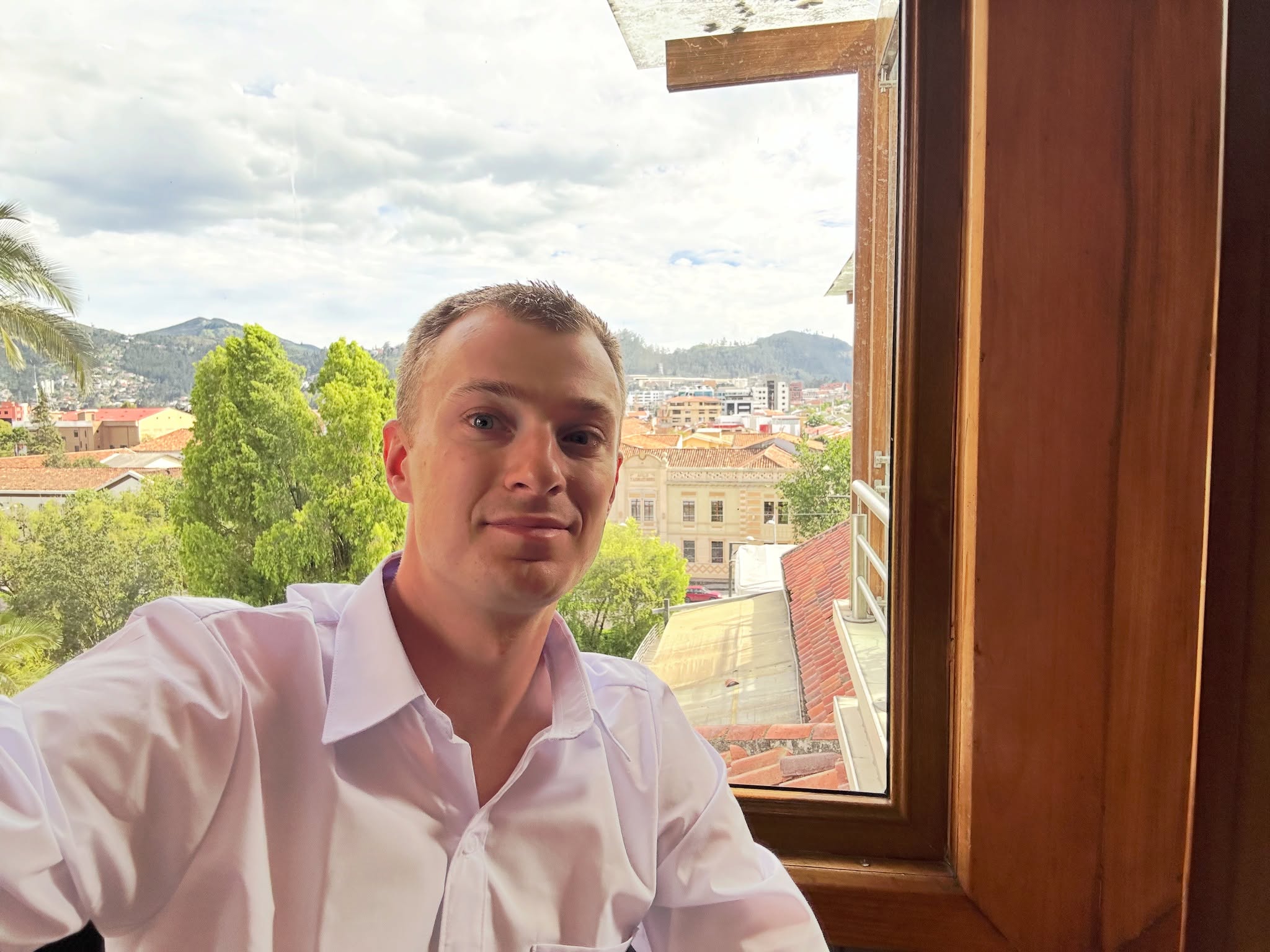
About the Author
Chip Moreno — American Expat in Cuenca, Ecuador
Chip is the founder of EcuaPass (Ecuador visa services), FileAbroad (U.S. taxes for expats), EcuaInsure (health insurance), EcuadorTranslations, and CuencaExpat (daily news). He holds a B.S. in Computer Science from WGU, obtained his Ecuador Professional Visa in 2025, and is pursuing the IRS Enrolled Agent credential and an Ecuadorian insurance broker license.