How to Notarize Your Will in Ecuador: A Step-by-Step Guide for Expats
Secure your legacy in Ecuador. Learn how a Notario Público authenticates wills (testamento) and estate documents, ensuring legal certainty and protecting your l
The Notary's Seal: Securing Your Will and Estate Documents in Ecuador
As an expatriate settling into life in Ecuador, particularly in a city like Cuenca, you will inevitably interact with a Notary Public. Their role extends far beyond witnessing a property sale; it is central to the solemn act of estate planning. The notarization of a will (testamento) is not a mere rubber-stamp formality. Under Ecuadorian law, it is the fundamental act that imbues your final wishes with legal certainty (certeza jurídica) and protects your loved ones from future disputes.
Understanding this process, which is deeply rooted in Ecuador's Civil Law tradition, is paramount. This guide provides an expert, in-depth look at the notary's function in certifying wills and other estate documents, empowering you to secure your legacy with confidence.
The Ecuadorian Notary: A Specialized Legal Authority
In Ecuador, a Notario Público is a highly-qualified lawyer (abogado) who has won a public competition and been appointed by the Consejo de la Judicatura (Judicial Council). This distinguishes them significantly from notaries in common law countries. Their core functions are to provide public faith, offer legal counsel, and maintain secure archives.
- Public Faith (Fe Pública): A document notarized in Ecuador is endowed with fe pública. This means it is presumed to be authentic, legal, and true. This legal presumption can only be overturned in court with strong evidence of fraud or duress, making a notarized will exceptionally difficult to challenge.
- Legal Counsel and Impartiality: Governed by the Ley Notarial, a notary is obligated to explain the legal effects of the document being signed. They act as an impartial legal professional, ensuring all parties understand their rights and obligations before proceeding.
- Official Record-Keeping (Protocolización): A key function is protocolización. The notary incorporates the original signed document into their official, chronologically-bound registry (protocolo). This ensures its permanent preservation and allows for the issuance of certified copies (copias certificadas) at any time in the future.
Certifying Your Will (Testamento): The Notary's Essential Role
The Código Civil Ecuatoriano (Ecuadorian Civil Code) governs the creation of wills. For expats, the most secure and common form is the Testamento Abierto (Open Will), executed as a public deed (escritura pública).
The Process for a Testamento Abierto (Open Will)
This is the most transparent and legally robust method for creating a will in Ecuador.
- Legal Drafting: Your will must be drafted by an Ecuadorian lawyer. This is not optional. A DIY or foreign will is unlikely to meet the strict requirements of Ecuadorian law, particularly concerning forced heirship.
- Scheduling the Notary Appointment: You, your lawyer, and your witnesses schedule a meeting at the notary's office.
- The Solemn Act: In the notary's presence, the will is read aloud, as mandated by Artículo 1046 del Código Civil. You (the testator) must then verbally declare that the document read contains your last will and testament. This is a critical solemnity.
- Witness Requirements: The law requires the presence of three suitable witnesses. Artículo 1052 del Código Civil specifies who cannot be a witness, including minors, the mentally incapacitated, foreigners not residing in Ecuador, and direct relatives (spouses, parents, children, siblings) of the testator, the notary, or any beneficiaries. Bringing a friend who is also a beneficiary is a common mistake that can invalidate the entire will.
- Execution and Signing: The will is signed in a single, uninterrupted act by you, the three witnesses, and the notary. The notary affixes their seal and signature, concluding the document with a formal clause attesting that all legal solemnities were observed.
- Protocolization and Cost: The notary immediately incorporates the will into their public registry. A certified copy is provided to you. The official fee for a standard Testamento Abierto, regulated by the Consejo de la Judicatura (per Resolución 143-2020), is typically around $220, plus VAT.
Testamento Cerrado (Closed Will): A Less Common Option
While legally permissible under Artículo 1055 del Código Civil, the closed will is now rarely used. With this type, the will's contents are sealed in an envelope, which is then presented to the notary and five witnesses. The notary writes a record on the envelope, which is signed by all parties. The will’s contents remain secret until death, at which point it must be opened through a formal judicial proceeding under the Código Orgánico General de Procesos (COGEP), adding significant complexity and delay for your heirs.
Hyper-Specific Detail: The Unavoidable Truth of Forced Heirship
Here is the single most critical legal detail foreign residents misunderstand: Ecuador has forced heirship laws. Under Artículo 1204 del Código Civil, certain heirs, known as legitimarios, have a legal right to a portion of your estate, regardless of what your will says.
- Who are the Legitimarios? Primarily your children (biological or adopted) and, in their absence, your surviving parents.
- What is their share? They are legally entitled to 50% of your estate (the legítima rigorosa). This half is divided equally among them. The remaining 50% is of "free disposal" (libre disposición) and can be left to anyone you choose.
- The Expert Insight: A notary is legally obligated to notarize a will as long as the formal solemnities (witnesses, reading aloud, etc.) are met. They will not stop you from signing a will that disinherits a child. However, upon your death, that disinherited child can easily challenge the will in court and claim their rightful share. An experienced Ecuadorian lawyer will structure your will to comply with this law, preventing it from being partially nullified later.
Notarizing Other Key Estate Documents
Beyond the will itself, a notary is indispensable for:
- Powers of Attorney (Poder Especial o General): To appoint someone to manage your affairs if you become incapacitated. These are executed as an escritura pública.
- Affidavits (Declaración Juramentada): For making sworn statements relevant to your estate, such as confirming your legal heirs or assets. A common fee for this is around $50.
- Acceptance or Renunciation of Inheritance (Aceptación o Repudiación de Herencia): Your heirs must formally accept or reject their inheritance via a public deed before a notary to proceed with the transfer of assets.
Common Expat Pitfalls in Cuenca and Beyond
- Using an Unofficial Translator: If you are not fluent in Spanish, you cannot simply bring a friend to translate. The Ley Notarial requires the notary to ensure full comprehension. You must hire an official translator (traductor/intérprete oficial) certified by the Consejo de la Judicatura. A notary in Cuenca will halt the proceeding if this requirement isn't met, causing significant delays.
- Misunderstanding Property Titles: Assuming your property will automatically pass via your will can be a mistake. How your property is titled (e.g., as an individual, with a spouse) impacts inheritance. A notary formalizes the escritura de compraventa (deed of sale), but an attorney should review it in the context of your overall estate plan.
- Forgetting to Update: A will notarized in Ecuador is valid until it is revoked by a newer one. After a major life event (marriage, divorce, birth of a child, death of a beneficiary), you must execute a new will. The process is the same as the original.
⚠️ Legal Alert: When to Stop and Consult an Attorney
A notary authenticates a legal act; an attorney strategizes and protects your interests. You must engage an Ecuadorian attorney before seeing a notary if:
- You have children or a spouse and need to understand the forced heirship rules.
- Your assets include property or accounts outside of Ecuador.
- You own a business or have complex investments.
- You wish to create trusts or establish specific long-term conditions for beneficiaries.
- You anticipate any potential conflict among your heirs.
The notary's role is to ensure the document is executed correctly. The attorney's role is to ensure it's the correct document for your unique situation.
The Notary's Seal: Your Promise of Legal Peace
In Ecuador, the notary's seal on your will is a powerful symbol of legal finality and authenticity. By working with a qualified Ecuadorian attorney to draft your documents and then executing them before a Notary Public, you are engaging with a robust legal system designed to protect your legacy. This diligence provides profound peace of mind, ensuring your wishes are honored and your loved ones are cared for exactly as you intended.
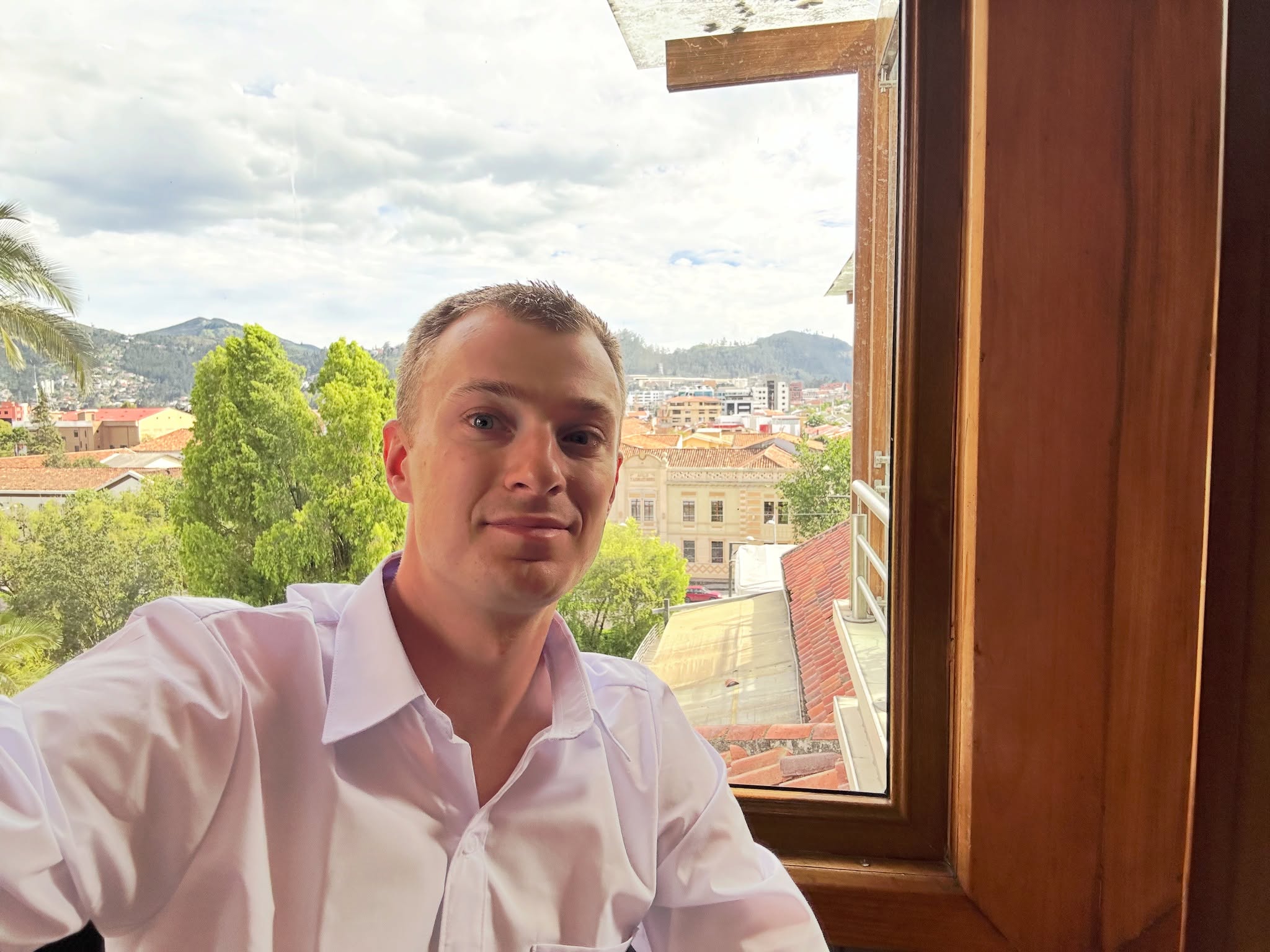
About the Author
Chip Moreno — American Expat in Cuenca, Ecuador
Chip is the founder of EcuaPass (Ecuador visa services), FileAbroad (U.S. taxes for expats), EcuaInsure (health insurance), EcuadorTranslations, and CuencaExpat (daily news). He holds a B.S. in Computer Science from WGU, obtained his Ecuador Professional Visa in 2025, and is pursuing the IRS Enrolled Agent credential and an Ecuadorian insurance broker license.